Sell / buy
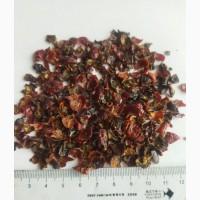
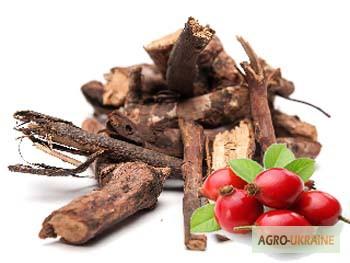
Sell Rosehip Root, Volyn region.
Region:
Volynskaya region.
(ratne)
Rose rose or wild rose - that's what people call this plant. Currently, about 100 species of rose hips are known.
Rosehip is a large shrub with arch-like hanging branches, 1.5 to 2.5 meters high, covered with strong sickle-shaped and very sharp thorns.
Young shoots have a greenish-red hue with small bristles and spines. Rosehip flowers are pink or white-pink, with 5 free petals and a yellow corolla in the center, up to 5 cm in diameter.
Rose hips bloom in May-June. Fruits are berry-like (up to 20 mm long), red-orange, of different shapes, with many hairy seeds inside.
Traditional medicine uses only rose hips for treatment, folk medicine uses all parts of the plant, and homeopathy uses only fresh fruits.
Rosehip can often be seen as a wild plant, and because of its decorative appearance, especially in spring during flowering, it is planted in parks, summer cottages, etc.
When a wild rose blooms (a huge bush up to 3 meters in height, covered with delicate pink flowers with a fragrant aroma) - you can't pass by the faint-hearted. In addition, rose hips also have many medicinal properties. The people call rosehip the healer of the forest.
Rosehip is first of all a great source of vitamins: vitamin C (up to 4800 mg%), vitamins B2, P, K, E, carotene, riboflavin. In the plant world, rose hips have the highest vitamin activity.
In addition to vitamins, rose hips contain salts of potassium, calcium, magnesium, iron, phosphorus, citric and malic acids, sugars, phytoncides, essential oils, tannins.
In the vitamin industry, rose hips are used to obtain preparations rich in vitamin C, such as ascorbic acid, galascorbin, rose hip syrup, holosas.
Holosas is a syrup made from a concentrated aqueous extract of rose hips, which is prescribed for cholecystitis, hepatitis, 1 teaspoon 2-3 times a day.
Rosehip is also used as an anti-inflammatory agent for burns and cracks.
Whole rosehip fruits are dried naturally, planted in a thin layer. But, some herbalists clean the fruits before drying, cut the fruit in half lengthwise, remove the seeds and hairs and dry only the fruit shells, spreading them in a thin layer in the open air. The vitamin content in the skins of fruits remains almost unchanged throughout the winter, and they can be consumed without heat treatment, directly in this form, without losing vitamins.
A person's daily need for vitamin C is about 50 mg, and it has a multifaceted physiological value. If there is general malaise, reduced resistance to infectious diseases, bleeding gums, which at the same time swell and acquire a bluish color, this means a lack of vitamin C in the body.
With a higher degree of avitaminosis C, bruises appear on the skin, usually in the area of the popliteal fossa and calf muscles. In such cases, it is necessary to take vitamin C more than the daily dose.
But it should be noted that an excess of vitamins is also harmful. This can lead to failure in various organs and systems. If you drink rosehip preparations for a very long time, it can have a negative effect on the liver. You may even be at risk of non-infectious jaundice.
(//tractor-service.com)
It is desirable to drink rosehip infusion through a straw, try not to allow it to come into contact with the teeth, since long-term use can lead to brittleness of the teeth. Or you need to rinse your mouth after each intake of syrup or rosehip infusion.
In order to provide a healthy body with the amount of vitamin C it needs in those seasons (late autumn, winter and early spring) when there is not a sufficient amount of vegetables andfruits, it is necessary to use dried rose hips.
It is best to use peeled rosehip fruits without any processing (10-15 g of shells per day). They have a light aroma and a slightly sour taste. Even small children usually eat them with pleasure.
If for some reason, for example, in the case of gastrointestinal disorders, it is not recommended to use the dried shell of rose hips, you can take infusion of rose hips (10 g of rose hips per 1 cup of boiling water), drink the infusion during the day.
Folk medicine uses rose hips to treat diseases of the liver, gall bladder, kidneys, bladder, heart, and pulmonary tuberculosis.
A special effect is given by the use of an infusion of dried rosehip fruit shells for stones and sand in the kidneys and bladder, as a means that anesthetizes and accelerates the crushing (resorption) of stones.
The infusion of rose hips is prepared from the fruits as follows: grind 1 tablespoon of fruits (10 g) so that the particles are no larger than 0.5 mm (or even whole), throw them into an enameled vessel, pour 0.5 l of boiling water, cover with a lid and leave in a boiling water bath for 15 minutes. Then remove and leave for another 30 minutes. Or, you can simply brew in a thermos in the same amount of water, for example overnight. Strain the infusion, take 0.5 cups 2 times a day for adults, before meals, and for children, the dosage should be halved and can be sweetened with honey, i.e. 1/8-1/4 cup, depending on age, and also 2 times a day.
There is another recipe for rosehip infusion: take 40berries, roughly chop and pour 1 liter of boiling water. Infuse in a thermos for 6-8 hours. Take 0.5 glasses 2-3 times a day, but no more than a month and through a tube so that the infusion does not touch the teeth. The fruits may not be crushed, but the crushed infusion will be richer.
Rosehip infusion is also recommended for hypertension, atherosclerosis (lowers cholesterol in the blood), for all infectious diseases, anemia, for all kinds of bleeding, to improve vision.
Petals of rosehip flowers, boiled with honey, are used for erysipelas of the skin. A decoction of flowers (100 g per 1 glass of water, boiled for 1 hour) is used for lotions for eye diseases. Juice obtained from flowerspowdered with sugar, take 1 tablespoon half an hour before meals.
Decoction of rosehip roots is recommended for kidney stones and hypertension, and flowers - for dysentery and disorders of the gastrointestinal tract. The roots contain tanids. They are also used to dye fabrics brown.
Decoction of rosehip roots: pour 1 tablespoon of crushed roots with 1 glass of boiling water and boil over low heat for no more than 15 minutes, leave to infuse until it cools down a little, then strain. Drink only warm, so it is recommended to keep the infusion in a thermos or in a wrapped container.
Steam from branches and young leaves is effective for sciatica with painful sensations. A decoction of rosehip roots is also used in the form of therapeutic baths for paralysis.
Rosehip oil: a detailed recipe, treatment methods are described on the medicinal oils page. Ego is made from rosehip seeds. It is rich in carotene (up to 40%). Rosehip oil is used for bedsores, trophic ulcers, dermatoses, as a choleretic agent. It is effective in the treatment of cracks and abrasions of the nipples of nursing mothers. For some dermatoses, rosehip oil is taken orally in limited doses - 1 teaspoon 2 times a day. In case of psoriasis, it is recommended to use ointment made from rosehip ash (stems) externally.
Rose hip liqueur: mix 1 glass of crushed fruit with 1.5 glasses of sugar, pour 3 glasses of vodka and leave in the sun for 5 days. After that, 2 glasses of vodka are added again and kept for another 5 days. Then the remains are filtered and squeezed. Liqueur is taken after meals, 15-20 ml.
Rosehip wine. For 16 liters of water, take 1.5 kg of rose hips (dry), 5 kg of sugar, 20 g of yeast (divide in half and put in 2 doses, after 2 days). Put everything in a 20 l bottle and install a water seal. Chop the fruits before laying them down. Put it in a warm place and let it ferment for up to 3 months, periodically shaking it. Then filter through a hose and add 200 ml of alcohol. That's it, rosehip wine is ready. You can let it stand for a few months and bottle it. Such a wine belongs to the category of healing wines and you should not drink it much. After all, an excess of vitamins is also harmful.
Rosehip, contraindications. Rosehip is contraindicated for people with increased sensitivity to rosehip preparations, people prone to thrombosis (thrombosis, thrombophlebitis), heartworms should not take rosehip in large quantities, especially with endocarditis, as well as with individual intolerance. People with gastritis (in case of increased acidity), and even more so with peptic ulcer disease, as well as kidney disease and diabetes, should be cautious when using rose hips.
Rosehip is a large shrub with arch-like hanging branches, 1.5 to 2.5 meters high, covered with strong sickle-shaped and very sharp thorns.
Young shoots have a greenish-red hue with small bristles and spines. Rosehip flowers are pink or white-pink, with 5 free petals and a yellow corolla in the center, up to 5 cm in diameter.
Rose hips bloom in May-June. Fruits are berry-like (up to 20 mm long), red-orange, of different shapes, with many hairy seeds inside.
Traditional medicine uses only rose hips for treatment, folk medicine uses all parts of the plant, and homeopathy uses only fresh fruits.
Rosehip can often be seen as a wild plant, and because of its decorative appearance, especially in spring during flowering, it is planted in parks, summer cottages, etc.
When a wild rose blooms (a huge bush up to 3 meters in height, covered with delicate pink flowers with a fragrant aroma) - you can't pass by the faint-hearted. In addition, rose hips also have many medicinal properties. The people call rosehip the healer of the forest.
Rosehip is first of all a great source of vitamins: vitamin C (up to 4800 mg%), vitamins B2, P, K, E, carotene, riboflavin. In the plant world, rose hips have the highest vitamin activity.
In addition to vitamins, rose hips contain salts of potassium, calcium, magnesium, iron, phosphorus, citric and malic acids, sugars, phytoncides, essential oils, tannins.
In the vitamin industry, rose hips are used to obtain preparations rich in vitamin C, such as ascorbic acid, galascorbin, rose hip syrup, holosas.
Holosas is a syrup made from a concentrated aqueous extract of rose hips, which is prescribed for cholecystitis, hepatitis, 1 teaspoon 2-3 times a day.
Rosehip is also used as an anti-inflammatory agent for burns and cracks.
Whole rosehip fruits are dried naturally, planted in a thin layer. But, some herbalists clean the fruits before drying, cut the fruit in half lengthwise, remove the seeds and hairs and dry only the fruit shells, spreading them in a thin layer in the open air. The vitamin content in the skins of fruits remains almost unchanged throughout the winter, and they can be consumed without heat treatment, directly in this form, without losing vitamins.
A person's daily need for vitamin C is about 50 mg, and it has a multifaceted physiological value. If there is general malaise, reduced resistance to infectious diseases, bleeding gums, which at the same time swell and acquire a bluish color, this means a lack of vitamin C in the body.
With a higher degree of avitaminosis C, bruises appear on the skin, usually in the area of the popliteal fossa and calf muscles. In such cases, it is necessary to take vitamin C more than the daily dose.
But it should be noted that an excess of vitamins is also harmful. This can lead to failure in various organs and systems. If you drink rosehip preparations for a very long time, it can have a negative effect on the liver. You may even be at risk of non-infectious jaundice.
(//tractor-service.com)
It is desirable to drink rosehip infusion through a straw, try not to allow it to come into contact with the teeth, since long-term use can lead to brittleness of the teeth. Or you need to rinse your mouth after each intake of syrup or rosehip infusion.
In order to provide a healthy body with the amount of vitamin C it needs in those seasons (late autumn, winter and early spring) when there is not a sufficient amount of vegetables andfruits, it is necessary to use dried rose hips.
It is best to use peeled rosehip fruits without any processing (10-15 g of shells per day). They have a light aroma and a slightly sour taste. Even small children usually eat them with pleasure.
If for some reason, for example, in the case of gastrointestinal disorders, it is not recommended to use the dried shell of rose hips, you can take infusion of rose hips (10 g of rose hips per 1 cup of boiling water), drink the infusion during the day.
Folk medicine uses rose hips to treat diseases of the liver, gall bladder, kidneys, bladder, heart, and pulmonary tuberculosis.
A special effect is given by the use of an infusion of dried rosehip fruit shells for stones and sand in the kidneys and bladder, as a means that anesthetizes and accelerates the crushing (resorption) of stones.
The infusion of rose hips is prepared from the fruits as follows: grind 1 tablespoon of fruits (10 g) so that the particles are no larger than 0.5 mm (or even whole), throw them into an enameled vessel, pour 0.5 l of boiling water, cover with a lid and leave in a boiling water bath for 15 minutes. Then remove and leave for another 30 minutes. Or, you can simply brew in a thermos in the same amount of water, for example overnight. Strain the infusion, take 0.5 cups 2 times a day for adults, before meals, and for children, the dosage should be halved and can be sweetened with honey, i.e. 1/8-1/4 cup, depending on age, and also 2 times a day.
There is another recipe for rosehip infusion: take 40berries, roughly chop and pour 1 liter of boiling water. Infuse in a thermos for 6-8 hours. Take 0.5 glasses 2-3 times a day, but no more than a month and through a tube so that the infusion does not touch the teeth. The fruits may not be crushed, but the crushed infusion will be richer.
Rosehip infusion is also recommended for hypertension, atherosclerosis (lowers cholesterol in the blood), for all infectious diseases, anemia, for all kinds of bleeding, to improve vision.
Petals of rosehip flowers, boiled with honey, are used for erysipelas of the skin. A decoction of flowers (100 g per 1 glass of water, boiled for 1 hour) is used for lotions for eye diseases. Juice obtained from flowerspowdered with sugar, take 1 tablespoon half an hour before meals.
Decoction of rosehip roots is recommended for kidney stones and hypertension, and flowers - for dysentery and disorders of the gastrointestinal tract. The roots contain tanids. They are also used to dye fabrics brown.
Decoction of rosehip roots: pour 1 tablespoon of crushed roots with 1 glass of boiling water and boil over low heat for no more than 15 minutes, leave to infuse until it cools down a little, then strain. Drink only warm, so it is recommended to keep the infusion in a thermos or in a wrapped container.
Steam from branches and young leaves is effective for sciatica with painful sensations. A decoction of rosehip roots is also used in the form of therapeutic baths for paralysis.
Rosehip oil: a detailed recipe, treatment methods are described on the medicinal oils page. Ego is made from rosehip seeds. It is rich in carotene (up to 40%). Rosehip oil is used for bedsores, trophic ulcers, dermatoses, as a choleretic agent. It is effective in the treatment of cracks and abrasions of the nipples of nursing mothers. For some dermatoses, rosehip oil is taken orally in limited doses - 1 teaspoon 2 times a day. In case of psoriasis, it is recommended to use ointment made from rosehip ash (stems) externally.
Rose hip liqueur: mix 1 glass of crushed fruit with 1.5 glasses of sugar, pour 3 glasses of vodka and leave in the sun for 5 days. After that, 2 glasses of vodka are added again and kept for another 5 days. Then the remains are filtered and squeezed. Liqueur is taken after meals, 15-20 ml.
Rosehip wine. For 16 liters of water, take 1.5 kg of rose hips (dry), 5 kg of sugar, 20 g of yeast (divide in half and put in 2 doses, after 2 days). Put everything in a 20 l bottle and install a water seal. Chop the fruits before laying them down. Put it in a warm place and let it ferment for up to 3 months, periodically shaking it. Then filter through a hose and add 200 ml of alcohol. That's it, rosehip wine is ready. You can let it stand for a few months and bottle it. Such a wine belongs to the category of healing wines and you should not drink it much. After all, an excess of vitamins is also harmful.
Rosehip, contraindications. Rosehip is contraindicated for people with increased sensitivity to rosehip preparations, people prone to thrombosis (thrombosis, thrombophlebitis), heartworms should not take rosehip in large quantities, especially with endocarditis, as well as with individual intolerance. People with gastritis (in case of increased acidity), and even more so with peptic ulcer disease, as well as kidney disease and diabetes, should be cautious when using rose hips.
Ad ID: #491695
(added by a registered user)
Permanent ad address:
Showed / watched for today: ?, total: ?
Similar fresh ads
Among them there are many interesting...