Sell / buy
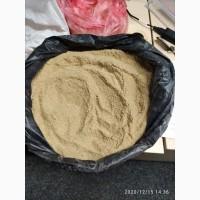
I will sell animal feed, Odessa region.
Region:
Odessa region.
(Malynov district)
Indicators of this product. We produce and process agricultural products and are the only producer of coniferous flour in Ukraine.
Coniferous flour is a vitamin feed for farm animals, obtained from artificially dried needles and pine branches, which can be added to granulated grass flour at the request of the customer.
Name of the indicator Значение
per 1 kg of dry matter
feed one 0.4
Protein (g) 37
Carotene (mg) 250
Cobalt 0.66 mg/kg
Iron 560 mg/kg
Manganese 145 mg/kg
Calcium 8.3
Potassium 12.5
Phosphorus 1.5
Vitamins:
K 18 mg/kg
R up to 3800 mg/kg(//tractor-service.com)
B1 17 mg/kg
B2 10 mg/kg
B3 24 mg/kg
PP 140 mg/kg
B6 2 mg/kg
H 0.13 mg/kg
E 350 mg/kg
C 1200 mg/kg
Chlorophyll up to 1.4%
Coniferous flour, vitamin feed for farm animals, obtained from artificially dried needles or thin spruce and pine twigs. To obtain coniferous flour, needles and small branches (thickness up to 0.8 cm) are crushed with crushers, then dried and ground. The production of pine flour is mainly organized during forest harvesting in winter (a large amount of essential oils are found in spring and summer harvested pine needles).
1 kg of dry matter of pine or fir needles contains - 0.4 fodder units and about 37 g of digestible protein, as well as an average of 350-360 mg of carotene. Coniferous flour contains vitamins of group B, vitamins C, PP, E, K, calcium, phosphorus, iron, manganese and other mineral substances. In terms of the content of group B vitamins, pine needles, especially pine needles, surpass the greens of cereal crops and are not inferior to alfalfa. Conifers contain chlorophyll and xanthophyll, which play an important role in metabolism, as well as a large amount of phytoncides, which protect animals from intestinal diseases. Therefore, the flour obtained from their needles has a bactericidal effect. In addition, pine flour contains sugar, glucose, fructose, pectin, tannins, cobalt, copper, manganese, zinc, iron. Such a complex mineral and vitamin nutrition of coniferous flour and the presence of easily fermentable carbohydrates in its composition has a positive effect on the physiological state of animals, increases their productivity and improves reproductive functions.
They are added to the diets of all agricultural animals and birds, especially in the winter and spring periods. Young cattle weighing more than 300 kg should be fed 1 kg of fresh needles at the beginning of fattening, 1.5 kg in the middle and 2 kg at the end of fattening per day. To compensate for the lack of carotene - provitamin A in the diets of cows, it is possible to introduce pine needle flour mixed with concentrates into it. With regular feeding of pine flour, calves are born viable, get sick less. Among cows, over-exertion and gynecological diseases are less common. Proizvodstvennyj opyt convinces that already after 10 days, cows that received 4-5 kg of pine flour daily give 2 kg more milk per day on average than cows that were not given it. Already after a month of feeding needles in 1 kg of milk, the content of vitamin A increases from 300 IU. up to 800 IU, that is, the same as when injecting vitamin A. Incompound feed include in the amount of 3-5%.
A similar effect is given by the use of needles in the rations of young cattle when growing and fattening them. The introduction of fresh crushed needles into the diet of young cattle allows to reduce feed costs for live weight gain by 5-10%. The introduction of fresh crushed needles into the diet of fattening cattle fully provides it with carotene, increases average daily gains in live weight, reduces feed costs per unit of gain, increases the economic efficiency of fattening.
The beneficial effect of feeding crushed needles and its infusion on the body of furry animals is noted. In recent years, there has been a tendency to use non-traditional feeds andfeed additives in feeding agricultural animals. This is due to the shortage of roughage in farms, the unsatisfactory quality ofhay, the insufficient content of vitamins and easily digestible carbohydrates in the rations.
In addition, pine needles contain microelements: Fe = 150-180 mg, Mn = 320
Ad ID: #364776
(added by a registered user)
Permanent ad address:
Showed / watched for today: ?, total: ?
Similar fresh ads
Among them there are many interesting...