For sale / buy
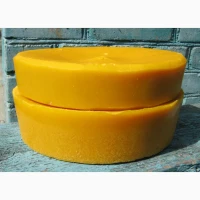
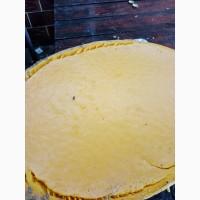
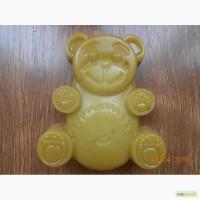
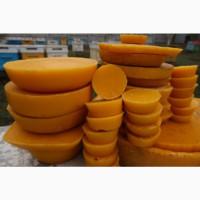
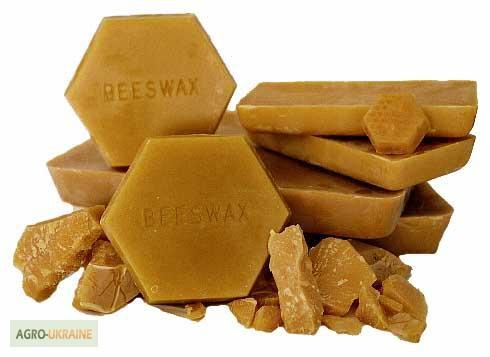
Beeswax, Lviv region.
Price200 UAH.
Region:all of Ukraine,
Lviv region.
(Ul. Yuzhnaya, office 23)
Updated:
With a pleasant honey smell, 100% natural, high-quality, without any supplements!
Beeswax has strong bactericidal properties. It is used for the production of pharmaceutical preparations, in the treatment of wounds, burns, ulcers, inflammatory processes of the skin and mucous membranes.
(//tractor-service.com)
In cosmetic products, for soap, massage tiles, lip balms, creams, lotions, etc., aromatic beeswax of natural origin is used. After honey, beeswax is the second most important beekeeping product.
Wax is an organic product, it is secreted by bees digesting pollen andhoney. Bees build combs from wax on frames with wax prepared in advance by the beekeeper. Bees copy neighboring frames to quickly build a comb, therefore, in the midst of honey collection, they completely build a frame in 20-24 hours.
During the season, beekeepers collect frames with combs (damaged, old ones) and melt them, each beekeeper does it differently, high-quality wax is obtained by solarvoskotopkoy, this is one of the simplest and most economical methods. There are also steamwax machines which separate the wax from the wax.
This is how beeswax is obtained, how can a simple person distinguish real wax from fakes? The first thing I would look for in wax is, of course, the aroma, the wax has a pleasant delicate aroma, the color can vary significantly from bright yellow to dark brown, but in no case is it not black - it is most likely burnt wax (remelting took place at a high temperature), and of course it is not white - it is paraffin, or as some "experts" claim, Alpine or Carpathian wax, paraffin has an unpleasant aroma, at best there is no aroma at all, it is also oily, something similar to chilled soap, if you rub it on your fingers, it remains oily. The next thing I would pay attention to is transparency, wax has a saturated color, and paraffin gives transparency.
Beeswax has strong bactericidal properties. It is used for the production of pharmaceutical preparations, in the treatment of wounds, burns, ulcers, inflammatory processes of the skin and mucous membranes.
(//tractor-service.com)
In cosmetic products, for soap, massage tiles, lip balms, creams, lotions, etc., aromatic beeswax of natural origin is used. After honey, beeswax is the second most important beekeeping product.
Wax is an organic product, it is secreted by bees digesting pollen andhoney. Bees build combs from wax on frames with wax prepared in advance by the beekeeper. Bees copy neighboring frames to quickly build a comb, therefore, in the midst of honey collection, they completely build a frame in 20-24 hours.
During the season, beekeepers collect frames with combs (damaged, old ones) and melt them, each beekeeper does it differently, high-quality wax is obtained by solarvoskotopkoy, this is one of the simplest and most economical methods. There are also steamwax machines which separate the wax from the wax.
This is how beeswax is obtained, how can a simple person distinguish real wax from fakes? The first thing I would look for in wax is, of course, the aroma, the wax has a pleasant delicate aroma, the color can vary significantly from bright yellow to dark brown, but in no case is it not black - it is most likely burnt wax (remelting took place at a high temperature), and of course it is not white - it is paraffin, or as some "experts" claim, Alpine or Carpathian wax, paraffin has an unpleasant aroma, at best there is no aroma at all, it is also oily, something similar to chilled soap, if you rub it on your fingers, it remains oily. The next thing I would pay attention to is transparency, wax has a saturated color, and paraffin gives transparency.
|
Author, contacts | |
Holovatsky Hryhoriy Vladimirovich / отзывы, инфо. / activity evaluation | |
|
Phone:
3809xxxxxx
show
| |
All user ads ~10 | |
Ad ID: #306441
(added by a registered user, registration date: 19-02-2013)
Added/Updated: 07-23-2026 15:15 (current, until: 23-07-2027)
Permanent ad address:
Showed / watched for today: ?, total: ?
Similar ads
Among them there are many interesting...