Sell / buy
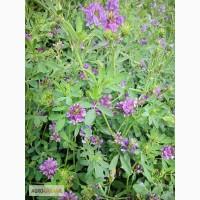
I will sell alfalfa seeds of the variety "Nadia" 1kg, Cherkassy region.
Price240 UAH.
Region:all Ukraine,
Cherkasskaya region.
(Cherkassy)
Updated:
Alfalfa is a perennial fodder crop that is the leader among fodder grasses in terms of protein content, which is not inferior to animal protein in its qualities. Hayalfalfa collected during bud formation contains up to 10% protein.
The presence of amino acids, Ca, P, K, N elements, vitamins A, D, E of group B (B1, B2, B3, B4, B5) makes this crop indispensable in the field of animal husbandry. In the modern world, alfalfa is used in medicine and gastronomy. Alfalfa sprouts have the ability to reduce so-called "harmful" cholesterol. There is a positive effect on all organs and systems of the body.
Fodder culture gives significant yields of both green mass and hay. If you observe the rules of sowing, irrigation, crop rotation, the productivity of the crop is 4-5 slopes per summer. The average yield of green mass is 45-75 t/ha, hay 8-15 t/ha.Seeds can be collected in the 2nd year, yield 500-900 kg/ha.
It is impossible not to note the soil-forming and phytosanitary role of alfalfa for the soil. A strong root system improves the structure of the soil, increases its water permeability, and contributes to the accumulation of humus.
Alfalfa is enough a light- and heat-loving plant, demanding on moisture, but resistant to drought. Thanks to the deeply located powerful root system, it can provide itself with moisture from the deeper layers of the soil, while the plant itself partially loses its leaves, but does not die.(//tractor-service.com)
The rate of sowing under a seeder is 15-20 kg/ha, by hand - 0.5 kg per hectare.
Weight of a thousand seeds: 1.92g
Reproduction: 2
Variety: Nadia
Similarity: 95%
Purity: 99.5%
The price is indicated for 1 kg.
The presence of amino acids, Ca, P, K, N elements, vitamins A, D, E of group B (B1, B2, B3, B4, B5) makes this crop indispensable in the field of animal husbandry. In the modern world, alfalfa is used in medicine and gastronomy. Alfalfa sprouts have the ability to reduce so-called "harmful" cholesterol. There is a positive effect on all organs and systems of the body.
Fodder culture gives significant yields of both green mass and hay. If you observe the rules of sowing, irrigation, crop rotation, the productivity of the crop is 4-5 slopes per summer. The average yield of green mass is 45-75 t/ha, hay 8-15 t/ha.Seeds can be collected in the 2nd year, yield 500-900 kg/ha.
It is impossible not to note the soil-forming and phytosanitary role of alfalfa for the soil. A strong root system improves the structure of the soil, increases its water permeability, and contributes to the accumulation of humus.
Alfalfa is enough a light- and heat-loving plant, demanding on moisture, but resistant to drought. Thanks to the deeply located powerful root system, it can provide itself with moisture from the deeper layers of the soil, while the plant itself partially loses its leaves, but does not die.(//tractor-service.com)
The rate of sowing under a seeder is 15-20 kg/ha, by hand - 0.5 kg per hectare.
Weight of a thousand seeds: 1.92g
Reproduction: 2
Variety: Nadia
Similarity: 95%
Purity: 99.5%
The price is indicated for 1 kg.
|
Shop, contacts | |
Violetta / отзывы, info.: 1 / оценка activities | |
|
Phone:
+380xxxxxx
show
| |
| https://nasintrav.com.ua/?utm_source=agrouk | |
| facebook.com/nasintrav.com.ua | |
| instagram.com/nasintrav.com.ua/utm_source=agrouk_inst | |
| youtube.com/@nasintrav/utm_source=agrouk_ytb | |

Ad ID: #261541
(added by a registered user, registration date: 04-17-2014)
Added/Updated: 06-25-2025 11:22 (relevant, until: 25-06-2026)
Permanent ad address:
Showed / watched for today: ?, total: ?