/ Agricultural equipment, equipment, inventory / Soil tillage equipment / Cultivators / Cultivators mounted KPN 4
For sale / buy
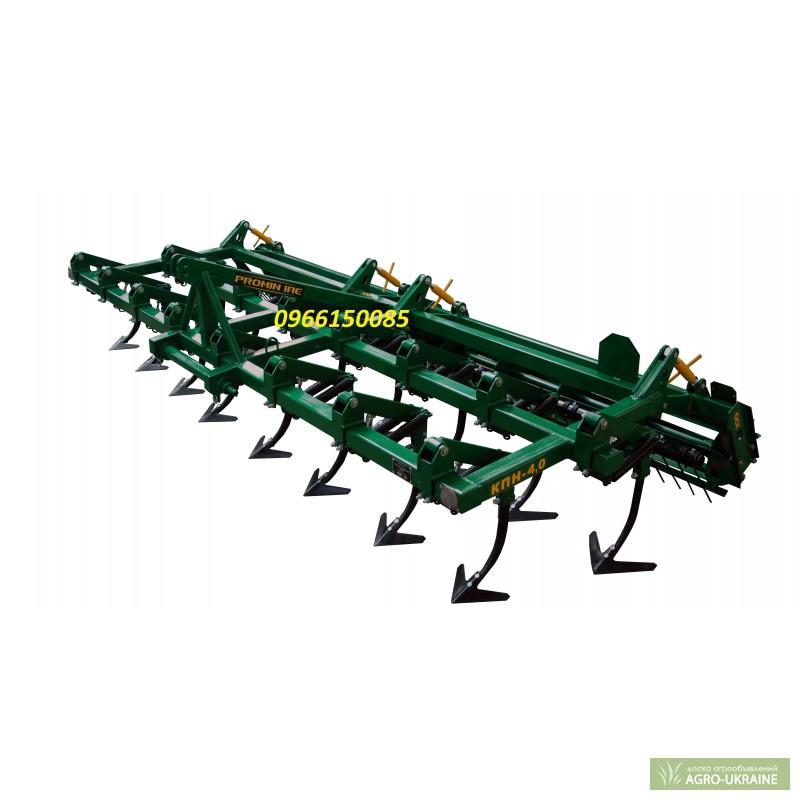
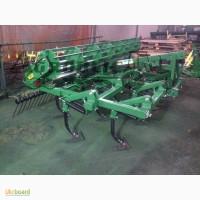
Hinged cultivators KPN 4, Cherkassy region.
Region:
Cherkasskaya oblast.
Pre-sowing mounted cultivator
The cultivator is designed for continuous pre-sowing soil cultivation, to a depth of 5÷12 cm with simultaneous cutting of the root system of weeds, crumbling, leveling and rolling of the soil surface, as well as for the care of steams.The stand of the cultivator has a spring-loaded design that ensures high-quality copying of the terrain and eliminates the breakage of the working leg when hitting an obstacle. The tillage depth is regulated by the rolling roller and the central thrust of the tractor's three-point linkage. The working bodies are located in 2 rows and have dimensions of 270 mm and 330 mm, respectively. The unit is also equipped with a height-adjustable comb for additional soil grinding.
KPN-3.0 KPN-4.0 KPN-6.0
Gripping width, m 3.0 4.0 6.0
Productivity, ha/hour 2.6...3.4 3.8...4.6 5.8...6.8
Processing depth, cm 5.0...12.0
Working speed, km/h 8.0...15.0
Transport width, m no more than 3.05 4.05 3.0
Weight, kg 650 780 1250
It is aggregated with tractors with a capacity of 40...60 70...100 110...140.
(//tractor-service.com)
The cultivator has a number of constructive advantages over analogues, namely:
1. The frame mounting bracketroller is attached to the transverse beams of the main frame, which reduced the load on the rear beam of the main frame of the unit.
2. The design of the unit has an asymmetric design that allows you to combine two cultivators with the help of a hitch.
3. Double-row bearings in the support are used in the design of the roller, which facilitates their maintenance and provides 5 times more!!! resource compared to bearing 31-UCF-208.
4. Polymer bushings with graphite grease are used in the joint unit of the cultivator stand, which has a lifetime guarantee and does not require maintenance in comparison with analogues that use metal bushings and Litol grease.
5. For aggregation with atractor, two holes are provided for connecting the central traction, which ensures aggregation with tractors of all companies without modifying the aggregate.
6. The rake uses springs with a curl "in the direction of the unit", which excludes spring breakage during operation.
The cultivator is designed for continuous pre-sowing soil cultivation, to a depth of 5÷12 cm with simultaneous cutting of the root system of weeds, crumbling, leveling and rolling of the soil surface, as well as for the care of steams.The stand of the cultivator has a spring-loaded design that ensures high-quality copying of the terrain and eliminates the breakage of the working leg when hitting an obstacle. The tillage depth is regulated by the rolling roller and the central thrust of the tractor's three-point linkage. The working bodies are located in 2 rows and have dimensions of 270 mm and 330 mm, respectively. The unit is also equipped with a height-adjustable comb for additional soil grinding.
KPN-3.0 KPN-4.0 KPN-6.0
Gripping width, m 3.0 4.0 6.0
Productivity, ha/hour 2.6...3.4 3.8...4.6 5.8...6.8
Processing depth, cm 5.0...12.0
Working speed, km/h 8.0...15.0
Transport width, m no more than 3.05 4.05 3.0
Weight, kg 650 780 1250
It is aggregated with tractors with a capacity of 40...60 70...100 110...140.
(//tractor-service.com)
The cultivator has a number of constructive advantages over analogues, namely:
1. The frame mounting bracketroller is attached to the transverse beams of the main frame, which reduced the load on the rear beam of the main frame of the unit.
2. The design of the unit has an asymmetric design that allows you to combine two cultivators with the help of a hitch.
3. Double-row bearings in the support are used in the design of the roller, which facilitates their maintenance and provides 5 times more!!! resource compared to bearing 31-UCF-208.
4. Polymer bushings with graphite grease are used in the joint unit of the cultivator stand, which has a lifetime guarantee and does not require maintenance in comparison with analogues that use metal bushings and Litol grease.
5. For aggregation with atractor, two holes are provided for connecting the central traction, which ensures aggregation with tractors of all companies without modifying the aggregate.
6. The rake uses springs with a curl "in the direction of the unit", which excludes spring breakage during operation.
Ad ID: #218358
(added by a registered user)
Permanent ad address:
Showed / watched for today: ?, total: ?
Similar fresh ads
Among them there are many interesting...
All Ukraine: Agricultural equipment, equipment, inventory 45594 / Soil processing technics 5476 / Cultivators 1610
Cherkasskaya oblast.: Agricultural equipment, equipment, inventory 1092 / Soil cultivation technics 126 / Cultivators 35