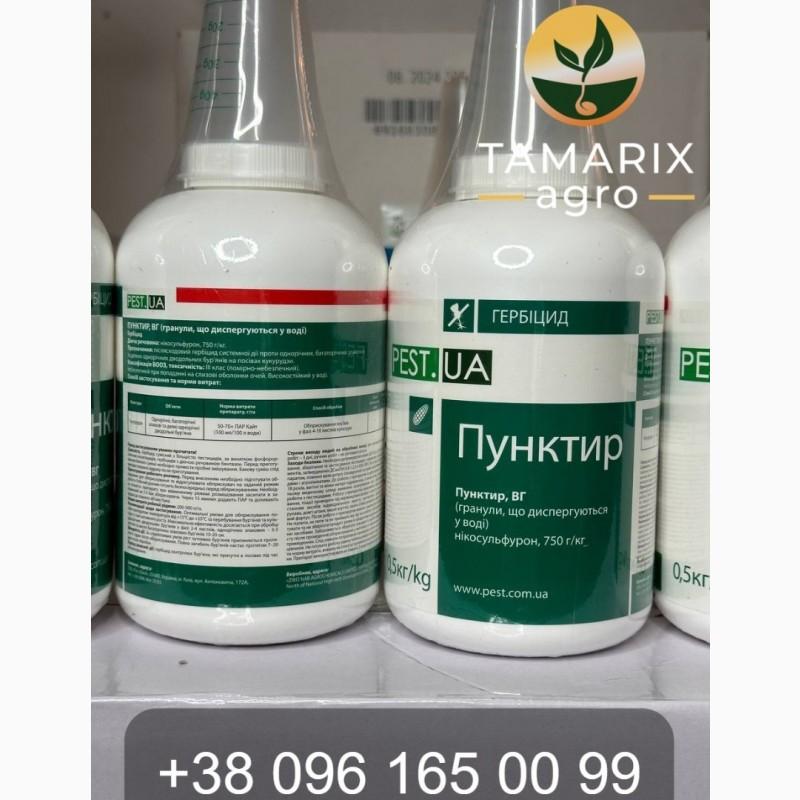
/ Fertilizers and plant protection products / Herbicides / Punctir herbicide (nicosulfuron, 750 g/kg)


Sell / buy
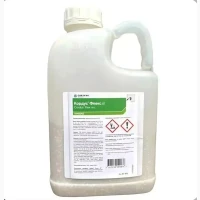
Punctyr herbicide (nicosulfuron, 750 g/kg), Vinnytsia region.
Price1650 UAH.
Region:all of Ukraine,
Vinnytsia region.
Updated:
Herbicide from cereal weeds in corn crops - DOT|142
Діюча речовина: Нікосульфурон, 750 г/кг
Purpose: Systemic post-emergence herbicide against annual, perennial grasses and some annual dicotyledonous weeds.
Formulation: Water-dispersible granules
Benefits:
Broad spectrum: effective against grasses and some dicotyledonous weeds, including persistent perennial grasses that germinate from seed and rhizomes (humai, wheatgrass).
Complete destruction of the root system: due to its high systemic effect, the drug eliminates creeping wheatgrass, which minimizes the need to fight it in the next season.
A long period of use: the possibility of application in the phase from 4 to 10 leaves of the culture provides flexibility in choosing the processing time.
Safety for culture: provided the regulations of use are followed, the drug has no phytotoxic effect.
Economy and convenience: the low application rate makes processing simple and effective.
Method of application and cost norms
Culture Objects Rate of consumption of the drug, g/ha Treatment method Maximum number of treatments
Corn Annual, perennial cereals and some annual dicotyledonous weeds 50*-70 + PAK Kite (0.1 l/100 l of water) Spraying crops in the phase of 4-10 leaves of the culture, provided that the culture does not shield weeds from the working solution -
* 50 g/ha to be used under optimal weather conditions and at the initial stages of weed development.
Recommendations for use
Optimum spraying conditions: the best result is achieved at temperatures from +15 °С to +25 °С, when weeds and crops are in the phase of active growth. For maximum effect, process:(//tractor-service.com)
annual dicotyledonous weeds in the phase of 2-4 leaves,
annual grass weeds in the phase of 3-5 leaves,
perennial cereal weeds with a height of 10-20 cm.
Within 7-10 days after processing, do not carry out inter-row cultivation of the soil.
Compatibility of the drug: the herbicide is well combined with most pesticides, except organophosphorusinsecticides and drugs based on bentazone. Before preparing the tank mixture, perform a test mixing and make sure that the terms of use of the components match.
Features of the soil: the active substance nicosulfuron quickly decomposes in acidic (pH < 7), moist and microbiologically active soils.
Reseeding and crop rotation:
If it is necessary to replant corn after treatment with the drug, it is possible to sow only corn in the spring, and soybeans after plowing.
In autumn, sowing of winter wheat or barley is permissible.
Next year, you can grow any crop, but in dry conditions on soils with an alkaline reaction (pH > 8), pay attention to the resistance of crops to nicosulfuron.
Herbicide resistance in crop rotation crops increases in the following sequence:
sugar beet > tomatoes > buckwheat > flax > wheat > barley > rapeseed > oats > soybean > corn.
The most sensitive are sugar beets, tomatoes andpotatoes.
Extending the range of action:
Tank mixtures can be used to control dicotyledonous weeds in corn crops:
Dotted (50-70 g/ha) + Julian (Disulam, Primus) (0.3-0.5 l/ha) + South African Kite (Alphalip) (0.1 l/100 l of water).
In the case of heavy clogging with white quinoa: Punctyr (50-70 g/ha) + Torino (10 g/ha) + PAR Kite (0.1 l/100 l of water).
Діюча речовина: Нікосульфурон, 750 г/кг
Purpose: Systemic post-emergence herbicide against annual, perennial grasses and some annual dicotyledonous weeds.
Formulation: Water-dispersible granules
Benefits:
Broad spectrum: effective against grasses and some dicotyledonous weeds, including persistent perennial grasses that germinate from seed and rhizomes (humai, wheatgrass).
Complete destruction of the root system: due to its high systemic effect, the drug eliminates creeping wheatgrass, which minimizes the need to fight it in the next season.
A long period of use: the possibility of application in the phase from 4 to 10 leaves of the culture provides flexibility in choosing the processing time.
Safety for culture: provided the regulations of use are followed, the drug has no phytotoxic effect.
Economy and convenience: the low application rate makes processing simple and effective.
Method of application and cost norms
Culture Objects Rate of consumption of the drug, g/ha Treatment method Maximum number of treatments
Corn Annual, perennial cereals and some annual dicotyledonous weeds 50*-70 + PAK Kite (0.1 l/100 l of water) Spraying crops in the phase of 4-10 leaves of the culture, provided that the culture does not shield weeds from the working solution -
* 50 g/ha to be used under optimal weather conditions and at the initial stages of weed development.
Recommendations for use
Optimum spraying conditions: the best result is achieved at temperatures from +15 °С to +25 °С, when weeds and crops are in the phase of active growth. For maximum effect, process:(//tractor-service.com)
annual dicotyledonous weeds in the phase of 2-4 leaves,
annual grass weeds in the phase of 3-5 leaves,
perennial cereal weeds with a height of 10-20 cm.
Within 7-10 days after processing, do not carry out inter-row cultivation of the soil.
Compatibility of the drug: the herbicide is well combined with most pesticides, except organophosphorusinsecticides and drugs based on bentazone. Before preparing the tank mixture, perform a test mixing and make sure that the terms of use of the components match.
Features of the soil: the active substance nicosulfuron quickly decomposes in acidic (pH < 7), moist and microbiologically active soils.
Reseeding and crop rotation:
If it is necessary to replant corn after treatment with the drug, it is possible to sow only corn in the spring, and soybeans after plowing.
In autumn, sowing of winter wheat or barley is permissible.
Next year, you can grow any crop, but in dry conditions on soils with an alkaline reaction (pH > 8), pay attention to the resistance of crops to nicosulfuron.
Herbicide resistance in crop rotation crops increases in the following sequence:
sugar beet > tomatoes > buckwheat > flax > wheat > barley > rapeseed > oats > soybean > corn.
The most sensitive are sugar beets, tomatoes andpotatoes.
Extending the range of action:
Tank mixtures can be used to control dicotyledonous weeds in corn crops:
Dotted (50-70 g/ha) + Julian (Disulam, Primus) (0.3-0.5 l/ha) + South African Kite (Alphalip) (0.1 l/100 l of water).
In the case of heavy clogging with white quinoa: Punctyr (50-70 g/ha) + Torino (10 g/ha) + PAR Kite (0.1 l/100 l of water).
|
Shop, contacts | |
Albina Osadchuk/ отзывы, инфо./ estimation of activity | |
|
Phone:
+380xxxxxx
show
| |
| Telegram: shopfarmer | |
| https://shop-farmer.com.ua/ | |
| facebook.com/share/14YZNtT4ZMM/?mibextid=wwXIfr | |
| instagram.com/_shop_farmer | |
Ad ID: #1323447
(added by a registered user, registration date: 06-25-2023)
Added / Updated: 08-11-2026 16:44 (current, until: 11-08-2027)
Permanent ad address:
Showed / watched for today: ?, total: ?
Similar ads
Among them there are many interesting ones...