/ Agricultural equipment, equipment, inventory / Разная с.х. equipment + in assortment / Solid fuel heat generators for grain dryers


Sell / buy
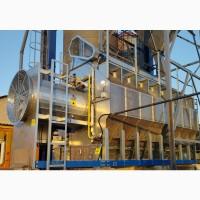
Solid fuel heat generators for grain dryers, Kirovohradskaya region.
Price1,000,000 UAH.
Region:all of Ukraine,
Kyrovograd region.
(Kropivnytskyi)
Updated:
The design of the heat generator is based on the principle of quick maintenance and maximum combustion of both the fuel itself and the flue gases released during the combustion process.
Heat generators actually incorporate all the advantages of the pyrolysis method of combustion and the advantages of a conventional solid fuel boiler.
A heat exchanger made of heat-resistant stainless steel and a combustion chamber are combined in one unit, which makes direct heat transfer without loss of efficiency. Below the firebox there is an ash collector, which allows you to quickly and conveniently clean the firebox.
Thanks to the built-in heat exchanger, the following advantages are achieved:
• Compactness and small dimensions.
• Combustion products that have entered the heat exchanger settle in ash accumulators, which facilitates maintenance.
• A large usable area of heat exchange significantly reduces fuel consumption and allows you to easily reach an air temperature at the outlet of 1200 C.
• Thanks to the design of the installation, the time of preparatory and installation work is significantly reduced.
• Insignificant fuel consumption for removing one ton-percent of moisture.
(//tractor-service.com)
The principle of operation of the heat generator: the fuel is automatically fed into the combustion chamber, where it burns, with the help of an auger. The main fan draws in air from above through the heat exchanger and, heating it to a temperature of 40 to 120 degrees C, supplies it to the chambergrain dryers, and combustion products (smoke) are removed through the chimney.
Control panel: automatically maintains the set temperature from 40 to 120 0C, can be equipped with a soft start or a frequency converter to reduce the starting load when starting the main fan. The control panel is equipped with a network gateway, which allows you to monitor the drying process from a mobile phone, laptop or computer, to see when the heat generator was turned on, at what temperature it worked, etc.
The type of fuel for the heat generator can be:sunflower waste, rapeseed, soybeans, cobscorn, small wood chips, pellets, etc. To remove 1 ton-percent of moisture, 2.5-3 kg per hectare of waste is used, or about 2 kg. pellets
One worker is enough for the maintenance and operation of the heat generator, cleaning is carried out once a day, which takes 20 minutes.
Safety measures: in the event of a power failure, the firebox is simply opened and the heat is swept out of the combustion chamber. At the same time, the heat exchanger does not suffer any damage.
Power of heat generators:
1 MW; 1.5 MW; 2 MW; 3 MW.
Warranty - 24 months.
Heat generators actually incorporate all the advantages of the pyrolysis method of combustion and the advantages of a conventional solid fuel boiler.
A heat exchanger made of heat-resistant stainless steel and a combustion chamber are combined in one unit, which makes direct heat transfer without loss of efficiency. Below the firebox there is an ash collector, which allows you to quickly and conveniently clean the firebox.
Thanks to the built-in heat exchanger, the following advantages are achieved:
• Compactness and small dimensions.
• Combustion products that have entered the heat exchanger settle in ash accumulators, which facilitates maintenance.
• A large usable area of heat exchange significantly reduces fuel consumption and allows you to easily reach an air temperature at the outlet of 1200 C.
• Thanks to the design of the installation, the time of preparatory and installation work is significantly reduced.
• Insignificant fuel consumption for removing one ton-percent of moisture.
(//tractor-service.com)
The principle of operation of the heat generator: the fuel is automatically fed into the combustion chamber, where it burns, with the help of an auger. The main fan draws in air from above through the heat exchanger and, heating it to a temperature of 40 to 120 degrees C, supplies it to the chambergrain dryers, and combustion products (smoke) are removed through the chimney.
Control panel: automatically maintains the set temperature from 40 to 120 0C, can be equipped with a soft start or a frequency converter to reduce the starting load when starting the main fan. The control panel is equipped with a network gateway, which allows you to monitor the drying process from a mobile phone, laptop or computer, to see when the heat generator was turned on, at what temperature it worked, etc.
The type of fuel for the heat generator can be:sunflower waste, rapeseed, soybeans, cobscorn, small wood chips, pellets, etc. To remove 1 ton-percent of moisture, 2.5-3 kg per hectare of waste is used, or about 2 kg. pellets
One worker is enough for the maintenance and operation of the heat generator, cleaning is carried out once a day, which takes 20 minutes.
Safety measures: in the event of a power failure, the firebox is simply opened and the heat is swept out of the combustion chamber. At the same time, the heat exchanger does not suffer any damage.
Power of heat generators:
1 MW; 1.5 MW; 2 MW; 3 MW.
Warranty - 24 months.
|
Author, contacts | |
TOV Zavod Elevatornyh Mashin / отзывы, инфо. / evaluation activities | |
|
Telephone:
+380xxxxxx
show
| |
| Telegram: graindryerua | |
| Viber: 380955826571 | |
| Whatsapp: 380955826571 | |
| http://elevator-m achines.com.ua | |
| facebook.com/100090539675430 | |
| instagram.com/zemagrostar | |
| youtube.com/channel/UCGvMukpYc1wzmpjYoocmSCA | |
All user ads ~47 | |
Ad ID: #1288134
(added by a registered user, registration date: 02-04-2022)
Added/Updated: 09-14-2026 16:50 (current, until: 09-14-2027)
Permanent ad address:
Showed / watched for today: ?, total: ?
Similar ads
Among them there are many interesting ones...



All Ukraine: Agricultural equipment, equipment, inventory 45636 / Raznaya s.h. equipment + in assortment 618
Kirovohrad region: Agricultural equipment, equipment, inventory 1794 / Raznaya farm. technics + in assortment 15