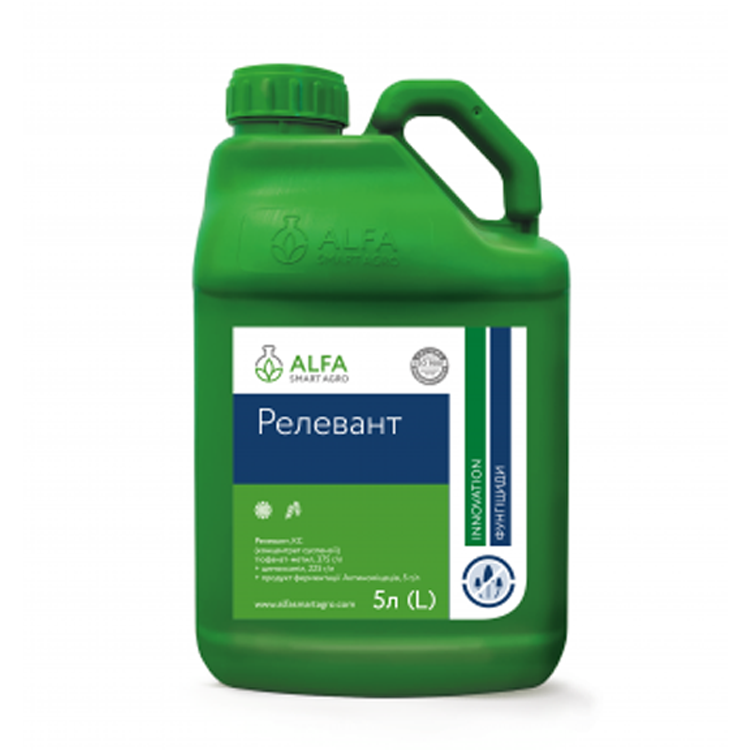
/ Fertilizers and plant protection products / Fungicides / Relevant - 3-component fungicide for protection...
For sale / buy
Relevant - 3-component fungicide to protect sunflower, soybean and rapeseed crops from diseases, Kievskaya region region.
Price12.5$
Region:all of Ukraine,
Kiev region.
(Vyshhorodok)
Updated:
Fungicide Relevant - three-component fungicide for the control of fungal and bacterial diseases in cropssunflower, soybeans andrape.
Content of the active substance:
thiophanate-methyl, 375 g/l + cymoxanil, 225 g/l + fermentation product of Actinomycetes, 5 g/l
Preparative form: suspension concentrate
Mode of action: contact and systemic.
Consumption rate: 0.5-0.75 l/ha
Rate of consumption of the working solution: 147
200-300 л/га
Packaging: 5 liters, the price is for 1 liter. 150
Спектр дії Фунгіцида Релевант:
Sunflower: Powdery mildew, powdery mildew, white and gray rot, fomosis, phomopsis, alternaria, septoriosis, stem bacteriosis.
Soybeans: powdery mildew, powdery mildew, white rot, alternaria, ascochitosis, septoriosis, angular spot.
Rape: powdery mildew, alternaria, sclerotiniosis, fomosis, bacteriosis.
Advantages of Fungicide Relevant:
control of a wide range of pathogens: effective against fungal pathogens (including pathogens from the class offalse fungi) and bacterial etiology;
has a strong curative, preventive and protective effect;
the combination of active substances with different mechanisms of action prevents the emergence of resistance in pathogens;
not phytotoxic, not harmful to beneficial entomofauna.
Application of Fungicide Relevant:
Sunflower
Consumption rate - 0.5-0.75 l/ha
Spectrum of action - powdery mildew, transferrosis, white and gray rot, fomosis, fomopsis, alternaria, septoriosis, stem bacteriosis.
Time of application - Spraying during the growing season of the crop.
Number of treatments - 2
Last processing period (days before harvesting) - 20
(//tractor-service.com)
Soya
Consumption rate - 0.5-0.75 l/ha
Spectrum of action - powdery mildew, powdery mildew, white rot, alternariosis, ascochitosis, septoriosis, angular spotting
Time of application - Spraying during the growing season of the crop.
Number of treatments - 2
The term of the last processing (days before harvesting) - 20
World experience of using Fungicide Relevant:
Rapak
Consumption rate - 0.5-0.75 l/ha
Spectrum of action - powdery mildew, alternaria, sclerotiniosis, fomosis, bacteriosis
Time of application - Spraying during the growing season of the crop.
Number of treatments - 2
The term of the last processing (days before harvesting) - 20
Mechanism of action of Fungicide Relevant:
Thiophanate-methyl stops and blocks the processes of division of the pathogenic cell nucleus, preventing the development of conidia.
Cymoxanil affects the synthesis of nucleic acids, proteins, fats, mycelial respiration and membrane penetration in pathogen cells, which ensures reliable inhibition of the pathogen and prevents the manifestation of resistance. The active substance has the effect of encapsulating infected cells, which stops the development and spread of the disease.
The fermentation product of Actinomycetes exhibits a systemic bactericidal effect, which stops the division and reproduction of bacterial cells by blocking protein synthesis and affecting the pathogen's RNA.
Due to the combination of active substances, the fungicide has a highly effective therapeutic and bactericidal effect. Pathogenic death occurs within 1-3 days due to encapsulation of infected plant cells.
The fungicide provides control of the causative agents of the most common fungal and bacterial diseases of soybeans and sunflowers, and is also effective against false fungi (perenosporosis).
Recommendations for the use of Fungicide Relevant:
the fungicide is used during the growing season prophylactically or at the appearance of the first signs of the disease;
optimal conditions for spraying crops with the drug: temperature from +15°С to +25°С;
to enhance the therapeutic effect of the drug, it is possible to add the surfactant Alfalip Extra, 0.2-0.3 l/ha, to the working solution. Addition of surfactant to the working solution is not mandatory, but it improves the wetting of the working surface, which increases the effectiveness of fungicidal treatment.
Precautions for the use of Fungicide Relevant:
spraying must be carried out before diseases cause irreversible crop losses;
avoid using the drug during heat, drought, strong wind and other adverse weather conditions.
Content of the active substance:
thiophanate-methyl, 375 g/l + cymoxanil, 225 g/l + fermentation product of Actinomycetes, 5 g/l
Preparative form: suspension concentrate
Mode of action: contact and systemic.
Consumption rate: 0.5-0.75 l/ha
Rate of consumption of the working solution: 147
200-300 л/га
Packaging: 5 liters, the price is for 1 liter. 150
Спектр дії Фунгіцида Релевант:
Sunflower: Powdery mildew, powdery mildew, white and gray rot, fomosis, phomopsis, alternaria, septoriosis, stem bacteriosis.
Soybeans: powdery mildew, powdery mildew, white rot, alternaria, ascochitosis, septoriosis, angular spot.
Rape: powdery mildew, alternaria, sclerotiniosis, fomosis, bacteriosis.
Advantages of Fungicide Relevant:
control of a wide range of pathogens: effective against fungal pathogens (including pathogens from the class offalse fungi) and bacterial etiology;
has a strong curative, preventive and protective effect;
the combination of active substances with different mechanisms of action prevents the emergence of resistance in pathogens;
not phytotoxic, not harmful to beneficial entomofauna.
Application of Fungicide Relevant:
Sunflower
Consumption rate - 0.5-0.75 l/ha
Spectrum of action - powdery mildew, transferrosis, white and gray rot, fomosis, fomopsis, alternaria, septoriosis, stem bacteriosis.
Time of application - Spraying during the growing season of the crop.
Number of treatments - 2
Last processing period (days before harvesting) - 20
(//tractor-service.com)
Soya
Consumption rate - 0.5-0.75 l/ha
Spectrum of action - powdery mildew, powdery mildew, white rot, alternariosis, ascochitosis, septoriosis, angular spotting
Time of application - Spraying during the growing season of the crop.
Number of treatments - 2
The term of the last processing (days before harvesting) - 20
World experience of using Fungicide Relevant:
Rapak
Consumption rate - 0.5-0.75 l/ha
Spectrum of action - powdery mildew, alternaria, sclerotiniosis, fomosis, bacteriosis
Time of application - Spraying during the growing season of the crop.
Number of treatments - 2
The term of the last processing (days before harvesting) - 20
Mechanism of action of Fungicide Relevant:
Thiophanate-methyl stops and blocks the processes of division of the pathogenic cell nucleus, preventing the development of conidia.
Cymoxanil affects the synthesis of nucleic acids, proteins, fats, mycelial respiration and membrane penetration in pathogen cells, which ensures reliable inhibition of the pathogen and prevents the manifestation of resistance. The active substance has the effect of encapsulating infected cells, which stops the development and spread of the disease.
The fermentation product of Actinomycetes exhibits a systemic bactericidal effect, which stops the division and reproduction of bacterial cells by blocking protein synthesis and affecting the pathogen's RNA.
Due to the combination of active substances, the fungicide has a highly effective therapeutic and bactericidal effect. Pathogenic death occurs within 1-3 days due to encapsulation of infected plant cells.
The fungicide provides control of the causative agents of the most common fungal and bacterial diseases of soybeans and sunflowers, and is also effective against false fungi (perenosporosis).
Recommendations for the use of Fungicide Relevant:
the fungicide is used during the growing season prophylactically or at the appearance of the first signs of the disease;
optimal conditions for spraying crops with the drug: temperature from +15°С to +25°С;
to enhance the therapeutic effect of the drug, it is possible to add the surfactant Alfalip Extra, 0.2-0.3 l/ha, to the working solution. Addition of surfactant to the working solution is not mandatory, but it improves the wetting of the working surface, which increases the effectiveness of fungicidal treatment.
Precautions for the use of Fungicide Relevant:
spraying must be carried out before diseases cause irreversible crop losses;
avoid using the drug during heat, drought, strong wind and other adverse weather conditions.
|
Store, contacts | |
Yuriy / отзывы, инфо. / evaluation activities | |
|
Telephone:
+38(xxxxxx
show
| |
All user ads ~1000 | |
Ad ID: #1278618
(added by a registered user, registration date: 10-08-2016)
Added / Updated: 21-09-2026 09:16 (current, until: 09-21-2027)
Permanent ad address:
Showed / watched for today: ?, total: ?
Similar ads
Among them there are many interesting ones...