For sale / buy
Brass solder, Dnipropetrovsk region.
Region:all of Ukraine,
Dnepropetrovsk region.
Updated:
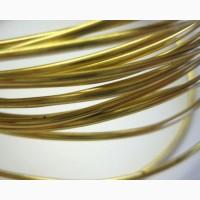
Brass solder is an alloy of copper and zinc, which intended for brazing (high-temperature soldering), the melting point of the solder is 875-895 C. Due to the zinc content, it is more resistant to corrosion than, for example, copper-phosphorus solder. Therefore, it is often used for soldering corrosion-resistant steels. Brass solder spreads quite well on steel and forms strong solder joints. When working with brass solder, in some cases, the parts are heated to a temperature of 900-1000C.
In general, brass solders are used for soldering copper and its alloys, stainless and carbon steels, hard alloy plates on lathe cutters. It is impractical to use it for brazing brass, since the melting temperature limit of the soldered part is within the limits of the melting temperature of the solder, as a result of which the risk of burning the part increases. Therefore, brazing of brass is usually done with silver-containing solder (PSr40 and PSr60) or phosphorous copper.
The connection of steel parts by soldering with brass solder is used instead of welding in those cases when the soldered steel parts are less than 1.5 mm thick and the connection requires greater elasticity than the welded connection. For example, for connecting steel fasteners, load-bearing frames, etc.(//tractor-service.com)
If the soldered or welded connection of steel parts is periodically subjected to deformation loads, then the advantage of the soldered connection over the welded one is that as a result of the deformation, the brass is susceptible to fracture and will not cause the base metal to burst. If the load is removed from the connection, then the brass brazed seam will serve no worse in strength than a steel welded seam made by semi-automatic welding in carbon dioxide or gas welding.
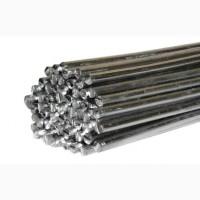
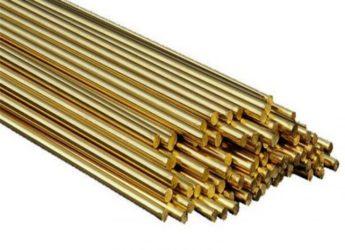
The weight of the rod is 10 g. The length is 50 cm. The diameter is 2 mm.
"
In general, brass solders are used for soldering copper and its alloys, stainless and carbon steels, hard alloy plates on lathe cutters. It is impractical to use it for brazing brass, since the melting temperature limit of the soldered part is within the limits of the melting temperature of the solder, as a result of which the risk of burning the part increases. Therefore, brazing of brass is usually done with silver-containing solder (PSr40 and PSr60) or phosphorous copper.
The connection of steel parts by soldering with brass solder is used instead of welding in those cases when the soldered steel parts are less than 1.5 mm thick and the connection requires greater elasticity than the welded connection. For example, for connecting steel fasteners, load-bearing frames, etc.(//tractor-service.com)
If the soldered or welded connection of steel parts is periodically subjected to deformation loads, then the advantage of the soldered connection over the welded one is that as a result of the deformation, the brass is susceptible to fracture and will not cause the base metal to burst. If the load is removed from the connection, then the brass brazed seam will serve no worse in strength than a steel welded seam made by semi-automatic welding in carbon dioxide or gas welding.
The weight of the rod is 10 g. The length is 50 cm. The diameter is 2 mm.
"
https://ukrstarline.ua/ru/
|
Author, contacts | |
Sales manager / отзывы, инфо. / evaluation activities | |
|
Telephone:
+380xxxxx
показать
| |
| https://ukrstarline.ua/ru/ | |
All ads пользователя ~778 | |
Ad ID: #1182085
(added by a registered user, registration date: 03-17-2022)
Added / Updated: 05-07-2026 10:08 (current, until: 05-07-2027)
Permanent ad address:
Showed / watched for today: ?, total: ?
Similar ads
Among them there are many interesting...