I will sell / buy
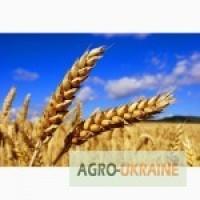
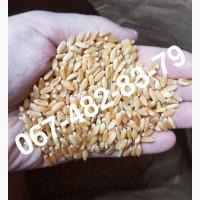
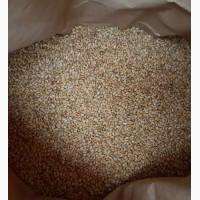
I will sell Canadian winter wheat varieties (elite) Alma and Baxter, Odessa region.
Region:all of Ukraine,
Odessa region.
Grain purpose: Seed material
Seeds wheat ALMA
ALMA is a mild Canadian transgenic winter variety (elite) of wheat:
yield - 120 centners/ha;
seeding rate - 150 kg per 1 ha; 140
можна сеять 10 лет подряд;
growing season - 280 days;
frost and drought resistance (up to -45°С, up to +50°С);
resistance to laying, shedding and standing of wheat.
Harvest year: 2021
price per kg: UAH 45
Delivery throughout Ukraine is FREE.
ALMA Canadian wheat is an elite winter soft variety grown in Canada.
Features of ALMA wheat seeds:
This variety of Canadian transgenic wheat can be sown for 10 years in a row, as it does not lose its properties.
It is characterized by good frost resistance up to -45°C in dry winter, without snow cover in combination with strong winds, due to genes isolated from the oceanic brown algae Fucus vesiculosus and the plant Colobanthus antarctic tolstolysty, which can withstand temperatures of -60°C, and grows on the bottom of the Arctic Ocean.
ALMA wheat is resistant to abiotic stresses - it tolerates spring temperature changes, frosts in the stage of full plant development.
Drought resistance up to +50°С due to genes introduced into the DNA structure of wheat T. persivalii Hubbard, T. turgidum L., and a set of genes transformed from Gladonia alpinum, which can withstand temperatures of +101°С, and introduced by transformation into wheat DNA cells.
Increased resistance to soil salinity due to the transformed cells of the solerosa plant (salicomia europea), the concentration of salts in groundwater up to 230 g/l.
It has 4 resistance genes H - 6 to Hessian fly, resistance gene H - 9 to winter wheat fly, Swedish fly, resistance gene H - 10 to oat, gall, peanut nematode, wheat nematode, resistance gene H -12 to American meromyza.
ALMA wheat has increased immunity to various fungal diseases and viruses that affect other types of wheat. Such as: different types and forms of wheat bacteriosis, root rot, snow mold, powdery mildew, dwarf rust, ergot, septoriosis, reticulated and bordered spot, black head rot, stone head rot, stem melanosis, Russian mosaic, corn fusarium, etc.
Thanks to the powerful stem, it is resistant to lodging and shedding, as well as ear failure.
ALMA wheat is harvested directly by harvesters, as the grain on the ear ripens evenly and does not require desiccation.
High productivity due to the length of the ear of 20 cm, the wheat bushiness coefficient of 24 stems, as well as the number of grains in a six-row ear.
It differs from other varieties of wheat in its high gluten content of 38%.
This variety of transgenic wheat was sown in Ukraine and showed excellent results in yield up to 120 centners per hectare.
Characteristics of wheat sowing ALMA
The weight of 1000 seeds is 55 grams.
The yield potential of the Canadian transgenic ALMA winter wheat variety is 150 cents per hectare.
The germination rate is 98%.
Germination energy is 98%.
Varietal purity - 100%.
Humidity - 11%.
The optimal sowing rate of ALMA winter wheat per 1 ha is 150 kg or 2.7 million units.
It is sownby ordinary grains with seed drills to a depth of 5-6 cm.
Sowing dates: starts from September 1 and lasts inclusively until October 30.
Insecticides: Volaton 50% - 1.5 l per 1 ha, or Decis 2.5% k.e. - 0.25 liters per 1 ha, or Tsymbush 10% k.e. - 0.5 liters per 1 ha.
Herbicides: for the fight against gorse, use triallate 50% of the liquid, or avadex BV 48% of the liquid in a dose of 2.5 l/ha, to destroy dicotyledonous 2.4 D amino salt 40% of the liquid. - 2 kg per 1 hectare, and for the fight against gorse and bristly, illoxan 36% k.e. 3 kg per 1 ha, Granstar ultra 25 grams per 1 ha in the phase of 2-3 leaves.
Fertilizers: The main fertilizer is intended to increase the level of plant nutrition throughout the growing season. Wheat responds well to organic fertilizers. General recommendations: 120 kg of nitroammofoska per 1 ha is applied when sowing or after sowing wheat and 120 kg in the spring.
BUFORD wheat seeds(//tractor-service.com)
BUFORD – hard winter Canadian transgenic variety (elite):
yield - 145 quintals per hectare; 195
можно сеять 8 лет подряд;
seeding rate - 150 kg per 1 ha;
growing season - 285 days;
frost and drought resistance (up to -30°C, up to +50°C);
resistance to lodging, shedding and standing of wheat.
Harvest year: 2021
price per kg: UAH 60
Delivery in Ukraine is FREE.
The main advantages of the BUFORD hybrid:
Intensive variety with high productivity.
The quality indicators of the grain correspond to the first class, and the variety is recognized as valuable.
Combines high productive bushiness. The coefficient of bushiness of BUFORD wheat is 22 stalks. The bush is upright, the stem is powerful, filled with connective tissue.
Formation of a strong root system. The root system of the plant is porous, penetrating to a depth of approximately 2 m.
Large, well-seeded ear, pyramidal, pubescent, up to 20 cm long.
It has a large, well-rounded grain, elongated, elongated shape, compressed on the sides. Thoroughly encased in special films: it practically does not fall off. Gives a large yield of granular flour.
Transgenic hard winter wheat Buford - an elite Canadian variety, intended for cultivation throughout the territory of Ukraine, does not like soils.
As for the agrotechnical requirements, the Buford variety has a high positive reaction to the increase of the agricultural background and a relatively high yield at a low agricultural background and deviations in the cultivation technology.
Features of BUFORD winter wheat seeds (Canadian selection)
A feature of BUFORD winter wheat seeds is that it ensures the effective implementation of all cultivation intensification measures, suitable for irrigation and organic farming conditions.
A distinctive feature of the BUFORD variety from other ordinary varieties:
The BUFORD variety of Canadian transgenic wheat can be sown 8 years in a row as it does not lose its qualities.
It has increased winter hardiness to -30°C in dry winter, without snow cover in combination with strong wind due to isolated genes from ocean algae Fucus vesiculosus growing at the bottom of the Arctic Ocean.
It is resistant to abiotic stresses and tolerates spring temperature changes of frost in the stage of full development of the plant -28°C.
It is characterized by good drought resistance up to +50°C due to genes introduced into the DNA structure of wheat Triticum aestivum L., T. persivalii Hubbard, T. turgidum L., Sphaerococcum Pers.
Highly tolerant to all fungal diseases of wheat, as well as to viruses affecting common varieties of wheat, such as (root rot, various types and forms of wheat bacteriosis, powdery mildew, snow mold, dwarf rust, net and bordered spotting, dusty and false dusty, black head and stone head, stem melanosis, ergot, septoriosis, fusarium head blight, Russian mosaic, etc.).
Resistance to lodging and shedding, as well as wheat dormancy, due to the strong, powerful stem of wheat.
BUFORD wheat is harvested directly by combine harvesters.
High productivity due to the length of the ear of 20 cm, as well as the number of grains and the six-rowed ear.
It differs from other types of wheat in its high vitreousness of 90%, as well as its high gluten content of 39%.
BUFORD wheat was sown in Ukraine and showed excellent results with a yield of 118 cents. with 1 ha.
Characteristics of BUFORD wheat seeds
The weight of 1000 seeds is 53 grams.
The yield potential of the BUFORD transgenic wheat variety is 145 cents. with 1 ha.
Germination is 98%.
Germination energy is 98%.
Varietal purity - 99.99%.
Humidity - 12%.
The rate of sowing BUFORD winter wheat per hectare is 2.8 million units. or 150 kg. It is sown with seed drills to a depth of 5-6 cm.
Sowing begins on September 15 and lasts until October 30.
Insecticides: Volaton 50% - 1.5 l per 1 ha, or Decis 2.5% k.e. - 0.25 liters per 1 ha, or Tsymbush 10% k.e. - 0.5 liters per 1 ha.
Herbicides: for the fight against gorse, use triallate 50% of the liquid, or avadex BV 48% of the liquid in a dose of 2.5 l/ha, to destroy dicotyledonous 2.4 D amino salt 40% of the liquid. - 2 kg per 1 hectare, and for the fight against gorse and bristly, illoxan 36% k.e. - 3 kg per 1 ha, Granstar ultra - 25 grams per 1 ha in the phase of 2-3 leaves.
Fertilizers: durum wheat uses significantly more nutrients from the soil, which ensures the production of grain with a high protein content. Fertilizer application rates (kg/ha) are calculated taking into account the content of nutrients in the soil, their removal by plants per unit of harvest, the utilization coefficients of nutrients from the soil and fertilizer.
General recommendations - 130 kg of nitroammophoska is applied during sowing or after sowing. It is possible to mix nitroammophoska withseeds in a percentage ratio of 1/2 and add to the soil, re-applied in the spring - 130 kg.
ALMA is a mild Canadian transgenic winter variety (elite) of wheat:
yield - 120 centners/ha;
seeding rate - 150 kg per 1 ha; 140
можна сеять 10 лет подряд;
growing season - 280 days;
frost and drought resistance (up to -45°С, up to +50°С);
resistance to laying, shedding and standing of wheat.
Harvest year: 2021
price per kg: UAH 45
Delivery throughout Ukraine is FREE.
ALMA Canadian wheat is an elite winter soft variety grown in Canada.
Features of ALMA wheat seeds:
This variety of Canadian transgenic wheat can be sown for 10 years in a row, as it does not lose its properties.
It is characterized by good frost resistance up to -45°C in dry winter, without snow cover in combination with strong winds, due to genes isolated from the oceanic brown algae Fucus vesiculosus and the plant Colobanthus antarctic tolstolysty, which can withstand temperatures of -60°C, and grows on the bottom of the Arctic Ocean.
ALMA wheat is resistant to abiotic stresses - it tolerates spring temperature changes, frosts in the stage of full plant development.
Drought resistance up to +50°С due to genes introduced into the DNA structure of wheat T. persivalii Hubbard, T. turgidum L., and a set of genes transformed from Gladonia alpinum, which can withstand temperatures of +101°С, and introduced by transformation into wheat DNA cells.
Increased resistance to soil salinity due to the transformed cells of the solerosa plant (salicomia europea), the concentration of salts in groundwater up to 230 g/l.
It has 4 resistance genes H - 6 to Hessian fly, resistance gene H - 9 to winter wheat fly, Swedish fly, resistance gene H - 10 to oat, gall, peanut nematode, wheat nematode, resistance gene H -12 to American meromyza.
ALMA wheat has increased immunity to various fungal diseases and viruses that affect other types of wheat. Such as: different types and forms of wheat bacteriosis, root rot, snow mold, powdery mildew, dwarf rust, ergot, septoriosis, reticulated and bordered spot, black head rot, stone head rot, stem melanosis, Russian mosaic, corn fusarium, etc.
Thanks to the powerful stem, it is resistant to lodging and shedding, as well as ear failure.
ALMA wheat is harvested directly by harvesters, as the grain on the ear ripens evenly and does not require desiccation.
High productivity due to the length of the ear of 20 cm, the wheat bushiness coefficient of 24 stems, as well as the number of grains in a six-row ear.
It differs from other varieties of wheat in its high gluten content of 38%.
This variety of transgenic wheat was sown in Ukraine and showed excellent results in yield up to 120 centners per hectare.
Characteristics of wheat sowing ALMA
The weight of 1000 seeds is 55 grams.
The yield potential of the Canadian transgenic ALMA winter wheat variety is 150 cents per hectare.
The germination rate is 98%.
Germination energy is 98%.
Varietal purity - 100%.
Humidity - 11%.
The optimal sowing rate of ALMA winter wheat per 1 ha is 150 kg or 2.7 million units.
It is sownby ordinary grains with seed drills to a depth of 5-6 cm.
Sowing dates: starts from September 1 and lasts inclusively until October 30.
Insecticides: Volaton 50% - 1.5 l per 1 ha, or Decis 2.5% k.e. - 0.25 liters per 1 ha, or Tsymbush 10% k.e. - 0.5 liters per 1 ha.
Herbicides: for the fight against gorse, use triallate 50% of the liquid, or avadex BV 48% of the liquid in a dose of 2.5 l/ha, to destroy dicotyledonous 2.4 D amino salt 40% of the liquid. - 2 kg per 1 hectare, and for the fight against gorse and bristly, illoxan 36% k.e. 3 kg per 1 ha, Granstar ultra 25 grams per 1 ha in the phase of 2-3 leaves.
Fertilizers: The main fertilizer is intended to increase the level of plant nutrition throughout the growing season. Wheat responds well to organic fertilizers. General recommendations: 120 kg of nitroammofoska per 1 ha is applied when sowing or after sowing wheat and 120 kg in the spring.
BUFORD wheat seeds(//tractor-service.com)
BUFORD – hard winter Canadian transgenic variety (elite):
yield - 145 quintals per hectare; 195
можно сеять 8 лет подряд;
seeding rate - 150 kg per 1 ha;
growing season - 285 days;
frost and drought resistance (up to -30°C, up to +50°C);
resistance to lodging, shedding and standing of wheat.
Harvest year: 2021
price per kg: UAH 60
Delivery in Ukraine is FREE.
The main advantages of the BUFORD hybrid:
Intensive variety with high productivity.
The quality indicators of the grain correspond to the first class, and the variety is recognized as valuable.
Combines high productive bushiness. The coefficient of bushiness of BUFORD wheat is 22 stalks. The bush is upright, the stem is powerful, filled with connective tissue.
Formation of a strong root system. The root system of the plant is porous, penetrating to a depth of approximately 2 m.
Large, well-seeded ear, pyramidal, pubescent, up to 20 cm long.
It has a large, well-rounded grain, elongated, elongated shape, compressed on the sides. Thoroughly encased in special films: it practically does not fall off. Gives a large yield of granular flour.
Transgenic hard winter wheat Buford - an elite Canadian variety, intended for cultivation throughout the territory of Ukraine, does not like soils.
As for the agrotechnical requirements, the Buford variety has a high positive reaction to the increase of the agricultural background and a relatively high yield at a low agricultural background and deviations in the cultivation technology.
Features of BUFORD winter wheat seeds (Canadian selection)
A feature of BUFORD winter wheat seeds is that it ensures the effective implementation of all cultivation intensification measures, suitable for irrigation and organic farming conditions.
A distinctive feature of the BUFORD variety from other ordinary varieties:
The BUFORD variety of Canadian transgenic wheat can be sown 8 years in a row as it does not lose its qualities.
It has increased winter hardiness to -30°C in dry winter, without snow cover in combination with strong wind due to isolated genes from ocean algae Fucus vesiculosus growing at the bottom of the Arctic Ocean.
It is resistant to abiotic stresses and tolerates spring temperature changes of frost in the stage of full development of the plant -28°C.
It is characterized by good drought resistance up to +50°C due to genes introduced into the DNA structure of wheat Triticum aestivum L., T. persivalii Hubbard, T. turgidum L., Sphaerococcum Pers.
Highly tolerant to all fungal diseases of wheat, as well as to viruses affecting common varieties of wheat, such as (root rot, various types and forms of wheat bacteriosis, powdery mildew, snow mold, dwarf rust, net and bordered spotting, dusty and false dusty, black head and stone head, stem melanosis, ergot, septoriosis, fusarium head blight, Russian mosaic, etc.).
Resistance to lodging and shedding, as well as wheat dormancy, due to the strong, powerful stem of wheat.
BUFORD wheat is harvested directly by combine harvesters.
High productivity due to the length of the ear of 20 cm, as well as the number of grains and the six-rowed ear.
It differs from other types of wheat in its high vitreousness of 90%, as well as its high gluten content of 39%.
BUFORD wheat was sown in Ukraine and showed excellent results with a yield of 118 cents. with 1 ha.
Characteristics of BUFORD wheat seeds
The weight of 1000 seeds is 53 grams.
The yield potential of the BUFORD transgenic wheat variety is 145 cents. with 1 ha.
Germination is 98%.
Germination energy is 98%.
Varietal purity - 99.99%.
Humidity - 12%.
The rate of sowing BUFORD winter wheat per hectare is 2.8 million units. or 150 kg. It is sown with seed drills to a depth of 5-6 cm.
Sowing begins on September 15 and lasts until October 30.
Insecticides: Volaton 50% - 1.5 l per 1 ha, or Decis 2.5% k.e. - 0.25 liters per 1 ha, or Tsymbush 10% k.e. - 0.5 liters per 1 ha.
Herbicides: for the fight against gorse, use triallate 50% of the liquid, or avadex BV 48% of the liquid in a dose of 2.5 l/ha, to destroy dicotyledonous 2.4 D amino salt 40% of the liquid. - 2 kg per 1 hectare, and for the fight against gorse and bristly, illoxan 36% k.e. - 3 kg per 1 ha, Granstar ultra - 25 grams per 1 ha in the phase of 2-3 leaves.
Fertilizers: durum wheat uses significantly more nutrients from the soil, which ensures the production of grain with a high protein content. Fertilizer application rates (kg/ha) are calculated taking into account the content of nutrients in the soil, their removal by plants per unit of harvest, the utilization coefficients of nutrients from the soil and fertilizer.
General recommendations - 130 kg of nitroammophoska is applied during sowing or after sowing. It is possible to mix nitroammophoska withseeds in a percentage ratio of 1/2 and add to the soil, re-applied in the spring - 130 kg.
Ad ID: #1142233
(added by a registered user)
Permanent ad address:
Showed / watched for today: ?, total: ?
Similar fresh ads
Among them there are many interesting...