Sell / buy
Seeds of winter barley BRANDON Canadian transgenic variety (elite), Odessa region.
Price45 UAH.
Region:all Ukraine,
Odesskaya region.
Updated:
Grain purpose: Seed material
Seeds of winter barley BRANDON Canadian transgenic variety (elite)
UAH 45/kg.
Packaging in branded paper bags of 20 kg.
Barley (BARLEY) BRANDON is a winter barley variety developed on the basis of nano technology by the well-known Canadian holding SERTIS HOLDING. Nano is a modified transgenic variety of barley, used for food purposes for cereals, as well as for cattle feed. Scientifically developed by transforming barley DNA cells, in Canada in 2019. Passed variety tests for frost resistance in the harsh climate of Canada, where the temperature in January 2020 fell to a mark of 42 C*, and also the barley was tested for drought resistance in Argentina, where the temperature in summer reaches + 45 C*.
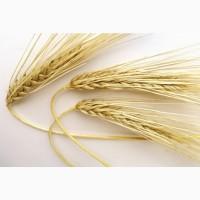
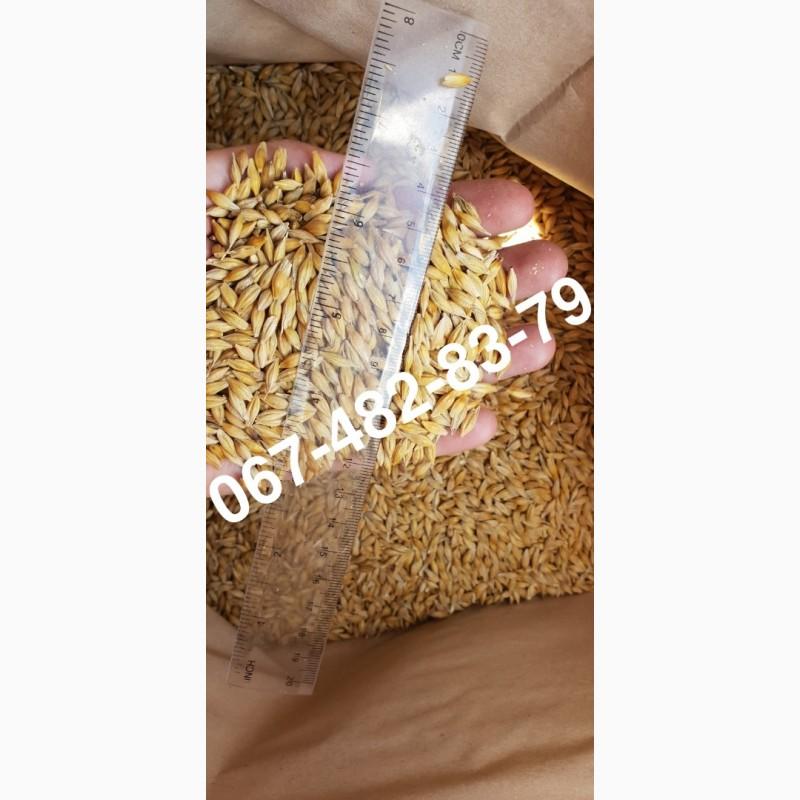
The height of the plants of BRANDON barley is 115 cm. The bush of barley has an erect coefficient of bushiness, it has 24 stems, the stems are powerful in girth, the ear is cylindrical, six rows, long, 18 cm. with long ears.grain winter barley of large size, golden color.
Distinctive feature of transgenic barley from other ordinary varieties and hybrids of barley.
1) This variety of Canadian transgenic barley can be sown 10 years in a row as it does not lose its sowing qualities.
2) It is characterized by excellent frost resistance up to -45 C* in a dry winter, without snow cover in combination with strong winds, due to the isolated PQ3n2e gene transformed from a larch tree (Larix sibirica) that can withstand temperatures of -71 C*.
3) Barley is resistant to increased UV radiation, direct solar radiation, and osmotic stress thanks to the modified WPKY gene of barley.
4) Barley is resistant to abiotic stresses due to transformed chromosomal aberrations of LEA genes, as well as transformed OSmyb4 and Myb4 genes, thanks to these two genes, barley perfectly tolerates spring temperature changes in the stage of full plant development from + 16 to - 20 C*.
3) A set of genes transformed from blue-green filamentous algae living in Kamchatka in hot geysers under conditions of high temperatures + 98 C*, increasing the drought resistance of barley up to + 50 C*.
4) Thanks to the transformation of the Rx Ry genes and the Psku1 gene, barley has a stable immunity to fungal diseases of barley, as well as to viruses affecting common varieties of barley.
5) Barley is resistant to highly saline soils due to transformed SVF1 genes from the DNA cells of cryobiont algae, which lives in Glauber's soda lakes with an increased concentration of salts in the water of 285 g/l and with a predominance of table salt of 347 g/l, which ideally grows on salt marshes.
6) Barley is harvested directly by harvesters, the barley ripens evenly and does not require desiccation.
7) BRANDON barley has 16 transformed genes of resistance to H — 6 to the barley fly; resistance gene H – 9 to barley Swedish fly, green-eyed cereal fly; resistance gene H – 10 to oat nematode, gall nematode, peanut nematode. It contains a transformed gene of resistance H — 13 to a scoop of grain; transformed dominant gene Rdn2 of resistance to wheat mite (Aceria tosichella); transformed dominant gene Rdn1 of resistance to barley blight (Diuraphis noxia); the transformed SZX16TN1 gene for resistance to the bread bugs Sephus pygmaeus, Tracheus tabidus.(//tractor-service.com)
8) Barley is resistant to partial flooding of fields with water, thanks to the transformed Sub1a gene.
9). 10) It differs in high productivity due to the length of the ear, as well as the number of grains in barley and the high coefficient of bushiness.
10) Отличается высокой урожайностью за счет длины колоса, а также количества зерен в ячмене и высокого коэффициента кустистости.
The weight of 1000 seeds is 54 grams.
The yield potential of the Canadian winter transgenic barley variety BRANDON is min. 145 cents per 1 ha.
Germination - 98%, Germination energy - 97%, Varietal purity - 100%, Moisture - 12%
The norm of sowing transgenic winter barley per 1 ha is 120 kg (the consumption of seed material is two times less than that of ordinary varieties), if the norm of sowing barley is exceeded, the thickened barley crops develop poorly, stretch out, and take away a lot of nutrients from each other. Winter barley is sown to a depth of 3 cm - 4 cm, using different methods of sowing, ordinary, row, narrow-row and cross-row method, or row-row with 15 cm inter-rows, seed drillsgrains, SPU-6D, mistral, precision drills.
Sowing begins to sow barley in the Southern regions from September 4 to October 30 inclusive, in the Northern regions from September 12 to October 18 inclusive.
Insecticides (etchants) — Cruiser (thiamethoxam 350 g \ l).
Use herbicides as needed Agritox 1 liter - 1.5 liters per 1 - ha in the tillering phase of the crop before emergence in spring, Granstar 75% s.t.s 20 - 25 grams per 1 - ha in the 1 - 3 leaf phase, Legato plus 600 KS 0.75 - 1 liter per 1 - ha in the 3 - 5 leaf phase, Marafonyev 375 g \ l of liquid 3.5 — 4 liters per 1 ha, Dialen Super 700 grams per 1 ha in the tillering phase of the crop before emergence into the tube in spring, Lintur (dicamba + triasulfuron) in the 3-4 leaf phase — 150 grams per 1 ha.
Fertilizers: Fully absorbs all mineral fertilizers applied to the crop. Fertilizers are applied depending on the soil and predecessors. General recommendations - 120 kg of nitroammofoska per 1 ha is applied when sowing barley and 120 kg in the spring. It is possible to mix nitroammophoska with seeds in a percentage ratio of 1/2 and apply it to the soil.
Harvesting of BRANDON winter barley starts from June 5 to the beginning of June 25.
The vegetation period of barley is 272 days. They are harvested with Niva, Don, Jondyr, Case, Massey Fergison combine harvesters.
FREE SHIPPING IN UKRAINE.
UAH 45/kg.
Packaging in branded paper bags of 20 kg.
Barley (BARLEY) BRANDON is a winter barley variety developed on the basis of nano technology by the well-known Canadian holding SERTIS HOLDING. Nano is a modified transgenic variety of barley, used for food purposes for cereals, as well as for cattle feed. Scientifically developed by transforming barley DNA cells, in Canada in 2019. Passed variety tests for frost resistance in the harsh climate of Canada, where the temperature in January 2020 fell to a mark of 42 C*, and also the barley was tested for drought resistance in Argentina, where the temperature in summer reaches + 45 C*.
The height of the plants of BRANDON barley is 115 cm. The bush of barley has an erect coefficient of bushiness, it has 24 stems, the stems are powerful in girth, the ear is cylindrical, six rows, long, 18 cm. with long ears.grain winter barley of large size, golden color.
Distinctive feature of transgenic barley from other ordinary varieties and hybrids of barley.
1) This variety of Canadian transgenic barley can be sown 10 years in a row as it does not lose its sowing qualities.
2) It is characterized by excellent frost resistance up to -45 C* in a dry winter, without snow cover in combination with strong winds, due to the isolated PQ3n2e gene transformed from a larch tree (Larix sibirica) that can withstand temperatures of -71 C*.
3) Barley is resistant to increased UV radiation, direct solar radiation, and osmotic stress thanks to the modified WPKY gene of barley.
4) Barley is resistant to abiotic stresses due to transformed chromosomal aberrations of LEA genes, as well as transformed OSmyb4 and Myb4 genes, thanks to these two genes, barley perfectly tolerates spring temperature changes in the stage of full plant development from + 16 to - 20 C*.
3) A set of genes transformed from blue-green filamentous algae living in Kamchatka in hot geysers under conditions of high temperatures + 98 C*, increasing the drought resistance of barley up to + 50 C*.
4) Thanks to the transformation of the Rx Ry genes and the Psku1 gene, barley has a stable immunity to fungal diseases of barley, as well as to viruses affecting common varieties of barley.
5) Barley is resistant to highly saline soils due to transformed SVF1 genes from the DNA cells of cryobiont algae, which lives in Glauber's soda lakes with an increased concentration of salts in the water of 285 g/l and with a predominance of table salt of 347 g/l, which ideally grows on salt marshes.
6) Barley is harvested directly by harvesters, the barley ripens evenly and does not require desiccation.
7) BRANDON barley has 16 transformed genes of resistance to H — 6 to the barley fly; resistance gene H – 9 to barley Swedish fly, green-eyed cereal fly; resistance gene H – 10 to oat nematode, gall nematode, peanut nematode. It contains a transformed gene of resistance H — 13 to a scoop of grain; transformed dominant gene Rdn2 of resistance to wheat mite (Aceria tosichella); transformed dominant gene Rdn1 of resistance to barley blight (Diuraphis noxia); the transformed SZX16TN1 gene for resistance to the bread bugs Sephus pygmaeus, Tracheus tabidus.(//tractor-service.com)
8) Barley is resistant to partial flooding of fields with water, thanks to the transformed Sub1a gene.
9). 10) It differs in high productivity due to the length of the ear, as well as the number of grains in barley and the high coefficient of bushiness.
10) Отличается высокой урожайностью за счет длины колоса, а также количества зерен в ячмене и высокого коэффициента кустистости.
The weight of 1000 seeds is 54 grams.
The yield potential of the Canadian winter transgenic barley variety BRANDON is min. 145 cents per 1 ha.
Germination - 98%, Germination energy - 97%, Varietal purity - 100%, Moisture - 12%
The norm of sowing transgenic winter barley per 1 ha is 120 kg (the consumption of seed material is two times less than that of ordinary varieties), if the norm of sowing barley is exceeded, the thickened barley crops develop poorly, stretch out, and take away a lot of nutrients from each other. Winter barley is sown to a depth of 3 cm - 4 cm, using different methods of sowing, ordinary, row, narrow-row and cross-row method, or row-row with 15 cm inter-rows, seed drillsgrains, SPU-6D, mistral, precision drills.
Sowing begins to sow barley in the Southern regions from September 4 to October 30 inclusive, in the Northern regions from September 12 to October 18 inclusive.
Insecticides (etchants) — Cruiser (thiamethoxam 350 g \ l).
Use herbicides as needed Agritox 1 liter - 1.5 liters per 1 - ha in the tillering phase of the crop before emergence in spring, Granstar 75% s.t.s 20 - 25 grams per 1 - ha in the 1 - 3 leaf phase, Legato plus 600 KS 0.75 - 1 liter per 1 - ha in the 3 - 5 leaf phase, Marafonyev 375 g \ l of liquid 3.5 — 4 liters per 1 ha, Dialen Super 700 grams per 1 ha in the tillering phase of the crop before emergence into the tube in spring, Lintur (dicamba + triasulfuron) in the 3-4 leaf phase — 150 grams per 1 ha.
Fertilizers: Fully absorbs all mineral fertilizers applied to the crop. Fertilizers are applied depending on the soil and predecessors. General recommendations - 120 kg of nitroammofoska per 1 ha is applied when sowing barley and 120 kg in the spring. It is possible to mix nitroammophoska with seeds in a percentage ratio of 1/2 and apply it to the soil.
Harvesting of BRANDON winter barley starts from June 5 to the beginning of June 25.
The vegetation period of barley is 272 days. They are harvested with Niva, Don, Jondyr, Case, Massey Fergison combine harvesters.
FREE SHIPPING IN UKRAINE.
|
Author, contacts | |
Andrey/ отзывы, инфо./ evaluation activities | |
|
Telephone:
050-xxxxxx
show
| |
All user ads ~33 | |
Ad ID: #1139925
(added by a registered user, registration date: 02-04-2018)
Added/Updated: 09-07-2026 08:50 (relevant, until: 09-07-2027)
Permanent ad address:
Showed / watched for today: ?, total: ?
Similar ads
Among them there are many interesting...