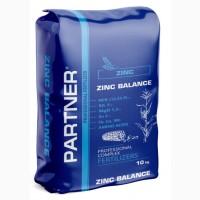
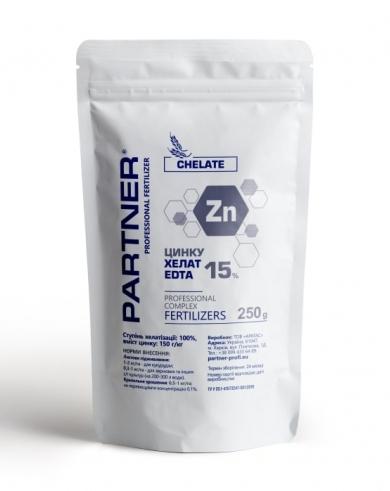
/ Fertilizers and plant protection products / Complex fertilizers / Zinc Chelate Zn EDTA 15%, PARTNER fertilizers

Sell / buy
Zinc Chelate Zn EDTA 15%, Fertilizers PARTNER, Vinnytsia region.
Region:all Ukraine,
Vynnytsia region.
(Ukraine)
Updated:
Degree of chelation - 100%, zinc Zn content - 150 g/kg.
Zinc is a component of many plant systems, it affects the metabolism in plants (protein, carbohydrate metabolism, synthesis of phytohormones), is part of various enzymes.
Zinc affects the permeability of membranes, stabilizes cellular components and systems of microorganisms, increases the resistance of plants to dry and hot climates, fungal and bacterial diseases, accelerates growth and development, increases the productivity of agricultural crops.
With a lack of zinc in plants, the metabolism is disturbed, the content of sucrose and starch decreases, chlorosis of the leaves develops, which slows down the formation of chlorophyll and reduces the activity of photosynthesis.
All cultivated plants in relation to zinc are divided into 3 groups:
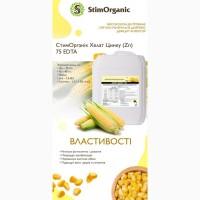
very sensitive (corn, flax, hops,grapes, fruit);
moderately sensitive (soy, beans, fodder legumes, peas, sugar beets,sunflower, clover, onions, potatoes, cabbage, cucumbers, berries);
slightly sensitive (oats, wheat, barley, rye, carrots, rice, alfalfa).
Properties of zinc chelate Zn EDTA 15%:
non-toxic;(//tractor-service.com)
does not contain chlorine;
stable in a wide range of pH of the working solution;
compatible with mineral fertilizers;
completely soluble in water and easily absorbed by plants;
resistant to the influence of microorganisms;
binds slightly to poorly soluble soil compounds;
differs in high transport activity and permeability through plant leaves;
compatible with ZZR.
Contribution rates: 165
Позакореневе внесення - 0,3-1 кг/га (для corn - from 1 to 2 kg/ha, for cereals - from 0.3 - 1 kg/ha for one application).
Drip irrigation - 0.5 - 1 kg/ha. WARNING! Do not exceed the concentration of more than 0.1% (100 g of product per 100 liters of water).
Line of trace elements "Chelate"
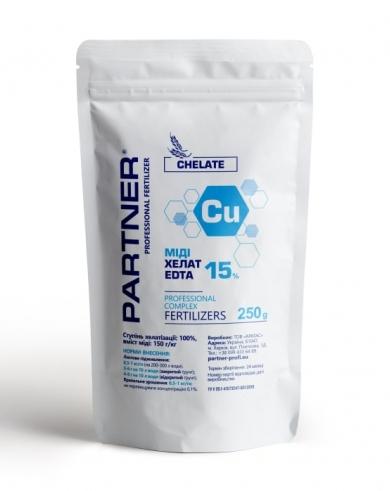
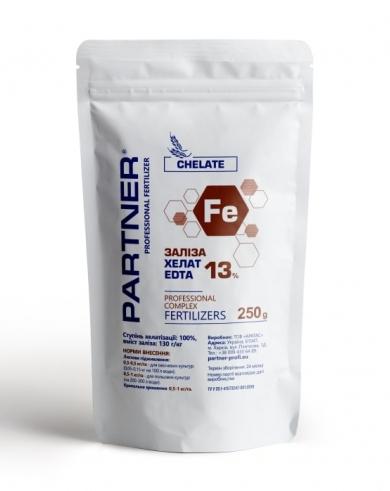
Trace elements Fe, Cu, Mn, Zn are in chelated form (EDTA) and are absorbed by the plant by 90-95%. Microfertilizers improve the protective properties of crops, their resistance to climatic features and disease.
Zinc is a component of many plant systems, it affects the metabolism in plants (protein, carbohydrate metabolism, synthesis of phytohormones), is part of various enzymes.
Zinc affects the permeability of membranes, stabilizes cellular components and systems of microorganisms, increases the resistance of plants to dry and hot climates, fungal and bacterial diseases, accelerates growth and development, increases the productivity of agricultural crops.
With a lack of zinc in plants, the metabolism is disturbed, the content of sucrose and starch decreases, chlorosis of the leaves develops, which slows down the formation of chlorophyll and reduces the activity of photosynthesis.
All cultivated plants in relation to zinc are divided into 3 groups:
very sensitive (corn, flax, hops,grapes, fruit);
moderately sensitive (soy, beans, fodder legumes, peas, sugar beets,sunflower, clover, onions, potatoes, cabbage, cucumbers, berries);
slightly sensitive (oats, wheat, barley, rye, carrots, rice, alfalfa).
Properties of zinc chelate Zn EDTA 15%:
non-toxic;(//tractor-service.com)
does not contain chlorine;
stable in a wide range of pH of the working solution;
compatible with mineral fertilizers;
completely soluble in water and easily absorbed by plants;
resistant to the influence of microorganisms;
binds slightly to poorly soluble soil compounds;
differs in high transport activity and permeability through plant leaves;
compatible with ZZR.
Contribution rates: 165
Позакореневе внесення - 0,3-1 кг/га (для corn - from 1 to 2 kg/ha, for cereals - from 0.3 - 1 kg/ha for one application).
Drip irrigation - 0.5 - 1 kg/ha. WARNING! Do not exceed the concentration of more than 0.1% (100 g of product per 100 liters of water).
Line of trace elements "Chelate"
Trace elements Fe, Cu, Mn, Zn are in chelated form (EDTA) and are absorbed by the plant by 90-95%. Microfertilizers improve the protective properties of crops, their resistance to climatic features and disease.
PRICE PARTNER™
Fertilizer PARTNER™ Presentation - Download
Fertilizer PARTNER™ Presentation - Download
|
Shop, contacts | |
Partner PF / отзывы, инфо. / activity evaluation | |
|
Phone:
(050xxxxxx
show
| |
| https://partner-pf.ua.market/ | |
| youtube.com/playlist?list=PLoIxIksuvXxD20CGpDJMmBc5O-m_ArShW | |
All user ads ~22 | |

Ad ID: #1108326
(added by a registered user, registration date: 03-13-2021)
Added / Updated: 09-26-2026 08:45 (current, until: 09-26-2027)
Permanent ad address:
Showed / watched for today: ?, total: ?
Similar ads
Among them there are many interesting...