/ Fertilizers and plant protection products / Potassium fertilizers / Potassium sulfate, 25 kg K2O-50-52%. S-18%, bag 25kg

Sell / buy
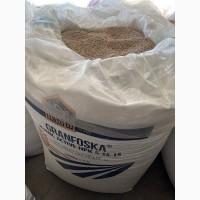
Potassium sulfate, 25 kg K2O-50-52%. S-18%, bag 25 kg, Zaporizhia region.
Region:all of Ukraine,
Zaporizhskaya region.
(M.Zaporizhia)
1300 UAH. - bag 25 kg
Potassium sulfate, 25 kg K2O-50-52%. S-18%
Potassium sulfate (potassium sulfate) is a fertilizer intended for use both in closed and open ground. Its composition contains more than 50% potassium, and there is no chlorine, which increases the positive effect of the agrochemical on all cultivated plants. After the application of K₂SO₄, the content of sugars and vitamins in grown fruits, vegetables and berries noticeably increases, the resistance of plants to various diseases increases, and the percentage of damage to finished products by heart rot and gray rot decreases.
Potassium sulfate should be used as a fertilizer to ensure a safe wintering for perennial plants. Having fed fruit and berry trees and shrubs with potassium sulfate in the fall, you can count on the fact that they will survive even the most severe frosts with minor losses.
This mineral fertilizer is especially suitable for all plants of the cruciferous family. They react very negatively to chlorine, which is contained in almost all potassium fertilizers. But in the formula of potassium sulfate, only sulfur oxide is additionally present, so this agrochemical is excellent for application to turnips, cabbage of all kinds, radishes and other plants of this family.
According to GOST 4145-74, this substance contains not only potassium, sulfur and oxygen, but also many impurities, such as iron, sodium, calcium, chlorine and even arsenic. The last element should not be feared, since it is added only to the composition of potassium sulfate, intended for laboratory use as a reagent. The rest of the accompanying elements are included in the composition of K₂SO₄ in very small quantities, so they can be ignored when developing a schedule and norms for the use of mineral fertilizers, microfertilizers will have to be added additionally.
It is recommended to use potassium sulfate for acidic soils, since, according to GOST, the pH of a solution of this substance in water ranges from 5.5 to 8 conventional units of measurement, and this property helps to balance the acid-alkaline balance of the medium.
Application of K₂SO₄
This mineral fertilizer is loved by many plants, and they gratefully respond to its introduction with a good and high-quality harvest. In order to get the planned result, you need to know the specifics of its application. Depending on the type of soil, K₂SO₄ is applied differently. On heavy loams, it poorly transitions into the soil complex, and it usually turns out to be locally locked at the place of application.
In order for potassium to become available to the roots, it must be applied in advance (preferably in autumn), removing the top layer of the earth (10-30 cm, depending on the type of plant).
Another way to quickly feed an adult plant with this substance is to make holes (vertical holes) around it, at an angle of 45 degrees, towards the roots, and pour the recommended dose of an aqueous solution of potassium sulfate there. For fruit trees, this agrochemical is applied at the time of planting, to the bottom of the planting hole, together withphosphoric fertilizer.
(//tractor-service.com)
Application rates for different cultures will be different. The dosage depends on individual characteristics, and on the amount of potassium consumption by those or other plants. The following proportions are recommended for spring digging of land for fruit and vegetable crops:
Tomatoes - 20 g per square meter;
Cucumbers - 15 g per square meter;
Cabbage, turnip - 25 g per square meter;
Potatoes - 30-35 g per square meter;
Berries - 20 g per square meter;
For the second top dressing, which is made in the middle of summer, you can take a solution of potassium sulfate. In this aggregate state, the active substance will reach the plant roots faster. On sandy soils, you can simply water your plantings under the roots, and on heavy loams, it is desirable to carry out foliar feeding. The solution is prepared as follows - take 35-40 g of potassium sulfate per 10 liters of water and thoroughly mix everything. Despite the almost complete dissolution of the salts, it is best to use this liquid fertilizer immediately, watering with an estimated amount of about 3-4 square meters. beds.
For summer fertilizing, you can use the dry fraction. This is especially convenient when planting plants in a row, between which grooves are drawn and K₂SO₄ powder is poured. But under fruit trees, this fertilizer is applied in much larger volumes - about 150-200 g per stem circle. The peculiarity of using potassium in this case is that its crystals must be buried in loose soil in the root zone.
Interaction of K₂SO₄ with otherfertilizers
The use of potassium sulfate as a fertilizer is very promising, as this fertilizer has the disadvantages of many other mineral fertilizers. But when introducing it, it is necessary to adhere to certain rules so as not to get the opposite result:
K₂SO₄ cannot be used simultaneously with urea and chalk.
It is necessary to mix potassium sulfate withnitrogen fertilizers strictly before applying to the soil.
When using potassium sulfate on acidic soils, for which it is recommended by agronomists, it is desirable to mix it with lime to achieve the best effect.
This product works best on carbonate soils, especially those intended for dividing vineyards.
When working with this sulfate, you must use personal protective equipment - gloves and a respirator mask.
The last application of any mineral fertilizers for fertilizing plants should be made at least two weeks before harvesting.
Advertisement ID: #1090924
(added by a registered user)
Permanent ad address:
Showed / watched for today: ?, total: ?
Similar fresh ads
Among them there are many interesting...