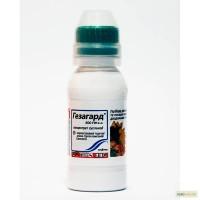
/ Fertilizers and plant protection products / Herbicides / For sale Herbicide Adengo 465 SC, KS, Bayer

I will sell / buy
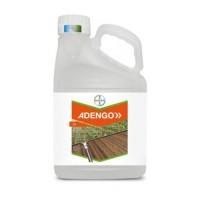
I will sell Herbicide Adengo 465 SC, KS, Bayer, Cherkassy region.
Region:
Cherkasskaya region.
(Sosnivskyi district PROSPECT KHIMIKIV building 59 office)
The price is for orders from 20 liters.
A practical and convenient systemic herbicide for combating monocotyledonous and dicotyledonous weeds in corn crops.
Active ingredient:
isoxaflutol, 225 g/l + thiencarbazone-methyl, 90 g/l + cyprosulfamide, 150 g/
Preparative form: suspension concentrate
Mechanism of action:
The drug has a double effect. One of the active substances — isoxaflutol (IFT) after application of the drug moves weakly down the profile and almost all of it remains in the upper layer of the soil (0–2 cm). The active substance is absorbed by the weed, mainly through the seed coat, roots and sprouts. Next, IFT turns into diketonitrile (DKN), which blocks the enzyme involved in the biosynthesis of plastaquinone in meristem tissues, causes discoloration and death of weeds. The best control of grass weeds under favorable conditions is achieved when processing up to 2 true leaves, broad-leaved up to 4. Older weeds are characterized by increased metabolism, so the residual amount of herbicide may not be enough to control them.
Behavior of IFT in the soil under optimal conditions of moisture. After applying the herbicide, part of the isoxaflutol in the soil turns into diketonitrile. The content and ratio between IFT and DKN in the soil depend on its moisture content. The higher the humidity, the more intensive the transformation of DCN. Unlike IFT, diketonitrile is more mobile, moves down the soil horizon and is localized in the form of a ribbon in the zone where the main mass of weed roots is located. Isoxaflutol provides control of weeds that germinate from the upper layers of the soil, and DKN destroys weeds that have already emerged and germinated from the deeper layers of the soil.
Behavior of IFT in soil with insufficient moisture. In dry conditions, the conversion of IFT into DCN is suspended. Isoxaflutol is stable on the soil surface, thanks to which long-term preservation of the herbicidal activity of the drug is achieved in conditions of insufficient humidity. The conversion of DKN from IFT resumes after precipitation — the "reactivation effect".
Factors affecting the effect of reactivation:
soil type and viscosity; content of organic matter; quality of pre-sowing treatment; availability of soil moisture at the time of application; precipitation after application; species spectrum of weeds, phase of their development and their number; amount and intensity of precipitation in the post-drought period.
Like all soil herbicides, Adengo® requires a sufficient amount of soil moisture to be highly effective.
The second active substance, thiencarbazone-methyl, provides the effect of "burning" those weeds whose seedlings have already appeared, acting both through the leaves and through the soil. Thiencarbazone-methyl is a class of ALS inhibitors that penetrates through roots and leaves, disrupts the processes of protein synthesis, and stops cell division in the meristem tissues of weeds.
Cyprosulfamide is a unique antidote that stimulates the acceleration of the decomposition of herbicide components in the tissues of cultivated plants, which ensures a mild effect of the drug on the culture.
Organization of crop rotation using Adengo®
3 months 4 months 5 months
Winter barley, winter wheat, spring wheat Durum wheat, spring barley Italian ryegrass, fenugreek, winter rye,winter triticale
11 months 12 months 17 months
Potatoes, beans, soybeans, tomatoes, peas Grain sorghum, cotton, mustard, pepper, rapeseed Sunflower, sugar beet, alfalfa
Deadlines may be revised depending on local climatic conditions
Properties:
Adengo® 46.5% SC, k.s. — innovative preemergence and early postemergence herbicide of systemic action against monocotyledonous and dicotyledonous weeds on corn.
SELECTIVITY
If corn treated with Adengo® needs reseeding for objective reasons (pests, diseases, anthropogenic factor), it can be done only with corn. In the autumn of the year of application of Adengo®, it is possible to sow only winter cereals.
During a long drought, in the period from the application of Adengo® to the next year's sowing, it is not recommended to sow the following sensitive crops: rapeseed, soybeans, peas and vegetable crops.
On soils with an acidity index above pH 7.5, the time limit for sowing sensitive crops increases to two years after the application of Adengo®.
The maximum rate of Adengo® (0.5 l/ha) is used only for seedlings. In the case of application in the early post-emergence period, the application rate of Adengo® should be no more than 0.44 l/ha.
The rate of use of Adengo® should be reduced to 0.35 l/ha, if Master® Power is planned to be used. There are no restrictions for monoculture cultivation.
APPLICATION
Adengo® 46.5% SC, k.s. is used on grain and silage corn both in the period from sowing to germination, and in the early post-emergence period - the phase of 2 leaves in corn. Under dry conditions at the time of sowing and after sowing the crop, pre-emergence application is less effective, in such circumstances, corn should be treated with Adengo® in the 2-leaf phase. When using Adengo® on growing corn, cereal weeds should not exceed the phase of 2 leaves, and broad-leaved weeds should not exceed 2-4 leaves.
The temperature mode of application is from 5...250C.
Do not mix with herbicides from the group of ALS inhibitors, because they affect the effectiveness of the antidote and increase the risk of phytotoxicity.
Addition of adhesive may result in phytotoxicity.
Mixing with some herbicides may precipitate, so be sure to conduct a compatibility test before use.
In the case of any mixture, it is necessary to shake the canister and dissolve Adengo® first.(//tractor-service.com)
Do not mix with organophosphate insecticides.
After usinginsecticides of this class, it is not recommended to apply herbicide earlier than 7 days later.
Do not use after the 3rd corn leaf phase.
Do not use on soils with an organic matter content of less than 1.5%.
Do not use on soils with a pH level of less than 4 and more than 7.5.
Do not use when the seeds are on the surface of the soil or are not sufficiently covered.
Do not water immediately before or after application.
APPLICATION STANDARDS
0.35–0.5 l/ha. The water application rate is 200–300 l/ha.
Fine-drop spraying is recommended. To achieve the highest effectiveness of the drug, the following recommendations should be followed:
uniform spraying over the entire culture area;
uniform wrapping of seeds to the optimal depth to prevent direct contact of corn seeds with the drug;
the mixerof the sprayer must work throughout the spraying time;
mechanical tillage of the soil should be avoided after applying the drug to the stage of 4-5 leaves of corn.
SPECTRUM OF ACTION
Dicotyledonous weeds:
Schirytsia, types Pereliska annual
Ambrosia polynolista Field forget-me-not
Chicken eyes field poppy
Field novel Pepper bittersweet
Lutyga sprologa Hirchak kidney
A row of hairy Birch bittersweet
Buckwheat ordinary Garden purslane
Loboda, species of wild radish
Field mustard Field mustard
Dopey ordinary Dry ribs medicinal
Common rakes Solanum black
Milk thistle annual Chistets
Tartar Buckwheat Middle Horoscope
The gill of incense, the field talaban
Galinsoga small-flowered Veronica of Persia
Dead sunflower Deaf nettle Netreba common
Глуха кропива Нетреба звичайна
Chamomile, species
Monocot weeds:
Widely common Mouse, species
Chicken millet, types of Sudanese sorghum
Semi-flowering millet Wild sorghum
Wild millet Hemostatic glove
Common thin horse
Sensitive
Medium sensitivity
ADVANTAGES
Extremely wide window and flexibility of use: from sowing to the 3rd leaf in corn.
Long-lasting soil action against broad-leaved and grass weeds with a unique burning potential during post-emergence application.
Low usage rate and high culture selectivity.
Highly effective weed control thanks to the "reactivation effect".
A practical and convenient systemic herbicide for combating monocotyledonous and dicotyledonous weeds in corn crops.
Active ingredient:
isoxaflutol, 225 g/l + thiencarbazone-methyl, 90 g/l + cyprosulfamide, 150 g/
Preparative form: suspension concentrate
Mechanism of action:
The drug has a double effect. One of the active substances — isoxaflutol (IFT) after application of the drug moves weakly down the profile and almost all of it remains in the upper layer of the soil (0–2 cm). The active substance is absorbed by the weed, mainly through the seed coat, roots and sprouts. Next, IFT turns into diketonitrile (DKN), which blocks the enzyme involved in the biosynthesis of plastaquinone in meristem tissues, causes discoloration and death of weeds. The best control of grass weeds under favorable conditions is achieved when processing up to 2 true leaves, broad-leaved up to 4. Older weeds are characterized by increased metabolism, so the residual amount of herbicide may not be enough to control them.
Behavior of IFT in the soil under optimal conditions of moisture. After applying the herbicide, part of the isoxaflutol in the soil turns into diketonitrile. The content and ratio between IFT and DKN in the soil depend on its moisture content. The higher the humidity, the more intensive the transformation of DCN. Unlike IFT, diketonitrile is more mobile, moves down the soil horizon and is localized in the form of a ribbon in the zone where the main mass of weed roots is located. Isoxaflutol provides control of weeds that germinate from the upper layers of the soil, and DKN destroys weeds that have already emerged and germinated from the deeper layers of the soil.
Behavior of IFT in soil with insufficient moisture. In dry conditions, the conversion of IFT into DCN is suspended. Isoxaflutol is stable on the soil surface, thanks to which long-term preservation of the herbicidal activity of the drug is achieved in conditions of insufficient humidity. The conversion of DKN from IFT resumes after precipitation — the "reactivation effect".
Factors affecting the effect of reactivation:
soil type and viscosity; content of organic matter; quality of pre-sowing treatment; availability of soil moisture at the time of application; precipitation after application; species spectrum of weeds, phase of their development and their number; amount and intensity of precipitation in the post-drought period.
Like all soil herbicides, Adengo® requires a sufficient amount of soil moisture to be highly effective.
The second active substance, thiencarbazone-methyl, provides the effect of "burning" those weeds whose seedlings have already appeared, acting both through the leaves and through the soil. Thiencarbazone-methyl is a class of ALS inhibitors that penetrates through roots and leaves, disrupts the processes of protein synthesis, and stops cell division in the meristem tissues of weeds.
Cyprosulfamide is a unique antidote that stimulates the acceleration of the decomposition of herbicide components in the tissues of cultivated plants, which ensures a mild effect of the drug on the culture.
Organization of crop rotation using Adengo®
3 months 4 months 5 months
Winter barley, winter wheat, spring wheat Durum wheat, spring barley Italian ryegrass, fenugreek, winter rye,winter triticale
11 months 12 months 17 months
Potatoes, beans, soybeans, tomatoes, peas Grain sorghum, cotton, mustard, pepper, rapeseed Sunflower, sugar beet, alfalfa
Deadlines may be revised depending on local climatic conditions
Properties:
Adengo® 46.5% SC, k.s. — innovative preemergence and early postemergence herbicide of systemic action against monocotyledonous and dicotyledonous weeds on corn.
SELECTIVITY
If corn treated with Adengo® needs reseeding for objective reasons (pests, diseases, anthropogenic factor), it can be done only with corn. In the autumn of the year of application of Adengo®, it is possible to sow only winter cereals.
During a long drought, in the period from the application of Adengo® to the next year's sowing, it is not recommended to sow the following sensitive crops: rapeseed, soybeans, peas and vegetable crops.
On soils with an acidity index above pH 7.5, the time limit for sowing sensitive crops increases to two years after the application of Adengo®.
The maximum rate of Adengo® (0.5 l/ha) is used only for seedlings. In the case of application in the early post-emergence period, the application rate of Adengo® should be no more than 0.44 l/ha.
The rate of use of Adengo® should be reduced to 0.35 l/ha, if Master® Power is planned to be used. There are no restrictions for monoculture cultivation.
APPLICATION
Adengo® 46.5% SC, k.s. is used on grain and silage corn both in the period from sowing to germination, and in the early post-emergence period - the phase of 2 leaves in corn. Under dry conditions at the time of sowing and after sowing the crop, pre-emergence application is less effective, in such circumstances, corn should be treated with Adengo® in the 2-leaf phase. When using Adengo® on growing corn, cereal weeds should not exceed the phase of 2 leaves, and broad-leaved weeds should not exceed 2-4 leaves.
The temperature mode of application is from 5...250C.
Do not mix with herbicides from the group of ALS inhibitors, because they affect the effectiveness of the antidote and increase the risk of phytotoxicity.
Addition of adhesive may result in phytotoxicity.
Mixing with some herbicides may precipitate, so be sure to conduct a compatibility test before use.
In the case of any mixture, it is necessary to shake the canister and dissolve Adengo® first.(//tractor-service.com)
Do not mix with organophosphate insecticides.
After usinginsecticides of this class, it is not recommended to apply herbicide earlier than 7 days later.
Do not use after the 3rd corn leaf phase.
Do not use on soils with an organic matter content of less than 1.5%.
Do not use on soils with a pH level of less than 4 and more than 7.5.
Do not use when the seeds are on the surface of the soil or are not sufficiently covered.
Do not water immediately before or after application.
APPLICATION STANDARDS
0.35–0.5 l/ha. The water application rate is 200–300 l/ha.
Fine-drop spraying is recommended. To achieve the highest effectiveness of the drug, the following recommendations should be followed:
uniform spraying over the entire culture area;
uniform wrapping of seeds to the optimal depth to prevent direct contact of corn seeds with the drug;
the mixerof the sprayer must work throughout the spraying time;
mechanical tillage of the soil should be avoided after applying the drug to the stage of 4-5 leaves of corn.
SPECTRUM OF ACTION
Dicotyledonous weeds:
Schirytsia, types Pereliska annual
Ambrosia polynolista Field forget-me-not
Chicken eyes field poppy
Field novel Pepper bittersweet
Lutyga sprologa Hirchak kidney
A row of hairy Birch bittersweet
Buckwheat ordinary Garden purslane
Loboda, species of wild radish
Field mustard Field mustard
Dopey ordinary Dry ribs medicinal
Common rakes Solanum black
Milk thistle annual Chistets
Tartar Buckwheat Middle Horoscope
The gill of incense, the field talaban
Galinsoga small-flowered Veronica of Persia
Dead sunflower Deaf nettle Netreba common
Глуха кропива Нетреба звичайна
Chamomile, species
Monocot weeds:
Widely common Mouse, species
Chicken millet, types of Sudanese sorghum
Semi-flowering millet Wild sorghum
Wild millet Hemostatic glove
Common thin horse
Sensitive
Medium sensitivity
ADVANTAGES
Extremely wide window and flexibility of use: from sowing to the 3rd leaf in corn.
Long-lasting soil action against broad-leaved and grass weeds with a unique burning potential during post-emergence application.
Low usage rate and high culture selectivity.
Highly effective weed control thanks to the "reactivation effect".
Ad ID: #1080096
(added by a registered user)
Permanent ad address:
Showed / watched for today: ?, total: ?
Similar fresh ads
Among them there are many interesting...