/ Fertilizers and plant protection products / Herbicides / Teaser - Highly effective soil herbicide for...

Sell / buy
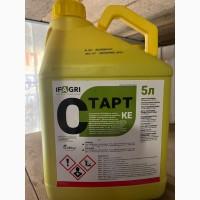
Teaser - Highly effective soil herbicide to protect agricultural crops from weeds, Kiev region.
Price5.25$
Region:all of Ukraine,
Kiev region.
(Vyshhorodok)
Updated:
Teaser - Highly effective soil herbicide with high selectivity for the protection of a wide range of agricultural crops from annual grass and dicot weed species.
Preparative form: Emulsifiable concentrate
Active substance: Propysochlor 720 g/l
Chemical group: Chloracetonilides
Toxicity: WHO classification: hazard class 3
Time limits for workers to leave the treated areas for mechanized work — 3 days, for manual work — no need.
Packaging: 20 l, the price is indicated for 1 l.
Advantages:
• provides high effectiveness for a long time — up to 12 weeks, depending on weather conditions;
• exhibits extremely high efficiency regardless of weather conditions due to the high moisture content of the active substance;
• there are no occurrences of phytotoxicity to the culture, even under conditions of significant precipitation and a decrease in air and soil temperature;
* relieves the problem of weediness at the initial stages of growth and development of culture;
• suitable for protection systems of hybrids andsunflower varieties resistant to imazapyr and imazamox, as well as tribenuron-methyl;
• is an ideal partner in tank mixes based on pendimethalin, promethrin, clomazon;
• quickly decomposes in the soil into non-toxic compounds.
Regulations of application:
*Corn, Rape, Sunflower, Sugar beets
Harmful object: annual dicotyledonous weeds, annual grass weeds
Waiting period: -
Method, time of processing, restrictions: Spraying the soil before sowing, during or after sowing, but before the emergence of crop seedlings
Consumption rates: 2 — 3 l/ha.
(//tractor-service.com)
* Soy
Harmful object: annual dicotyledonous weeds, annual grass weeds
Waiting period: -
Method, time of treatments, restrictions: Spraying the soil before sowing, during or after sowing, but before the appearance of crop seedlings.
Consumption rates: 2 — 3 l/ha
Compatibility:
Compatible with other soil herbicides on appropriate crops, except for alkaline ones. Before preparing working mixtures, it is advisable to check their compatibility (absence of sediment, foam, delamination, clumping, incomplete dissolution of one of the preparations, etc.)
Mechanism of action:
The active substance — propisochlor — acts on the initial stages of development of annual grass and dicotyledonous weed species. The drug is absorbed through the seedlings and root system of germinating weeds. Penetrating through the tips of the root system, the active substance quickly leads to the death of weeds. In addition to inhibiting the synthesis of proteins and nucleic acids, the drug suppresses the growth of the root system. The herbicide forms a protective screen in the top layer of the soil, which allows you to control the next waves of weed emergence. With post-emergence application, the active substance acts secondarily through the leaves (before the phase of one leaf)
Range of action:
Annual cereals: chicken millet, mouse millet (species), glove (species), ovsyug, common sedge, gumai (from seeds)
Annual dicotyledons: glainsoga (species), styrytsia (species), chamomile (species), sedum sedum, common sedum, common asteraceae, common sorrel,mustard field, poppy (species), common mustard, thorny nettle, field plantain, common sedge, blue cornflower, deaf nettle, field sedge, medicinal turnip, Sofia's curlew
The maximum number of treatments: 1
Rate of consumption of working solution: 200-300 l/ha
Features of application:
The rate of herbicide application depends on: the content of humus in the soil, the mechanical composition of the soil (light, medium, heavy), as well as on the predicted weed species and weather conditions. The application of the drug is carried out on the moist surface of the soil with small lumps, since large lumps increase the area of absorption and reduce the effectiveness of the action. If the soil is moist, digging into the soil is not necessary. In conditions of insufficient soil moisture, it is necessary to apply the herbicide mechanically (light harrows, ring-spur rollers), adjusting with the depth of sowing the crop. Optimal conditions are precipitation or irrigation within 7-10 days after spraying, which enhances the penetration of the herbicide into the weed seed germination zone and shows high effectiveness.
|
Магазин, контакты | |
Юрій / отзывы, инфо. / activity assessment | |
|
Phone:
+38(xxxxxx
show
| |
All user ads ~1000 | |
Ad ID: #1048613
(added by a registered user, registration date: 10-08-2016)
Added/Updated: 09-30-2026 09:06 (current, until: 30-09-2027)
Permanent ad address:
Showed / watched for today: ?, total: ?
Similar ads
Among them there are many interesting...